

About this episode
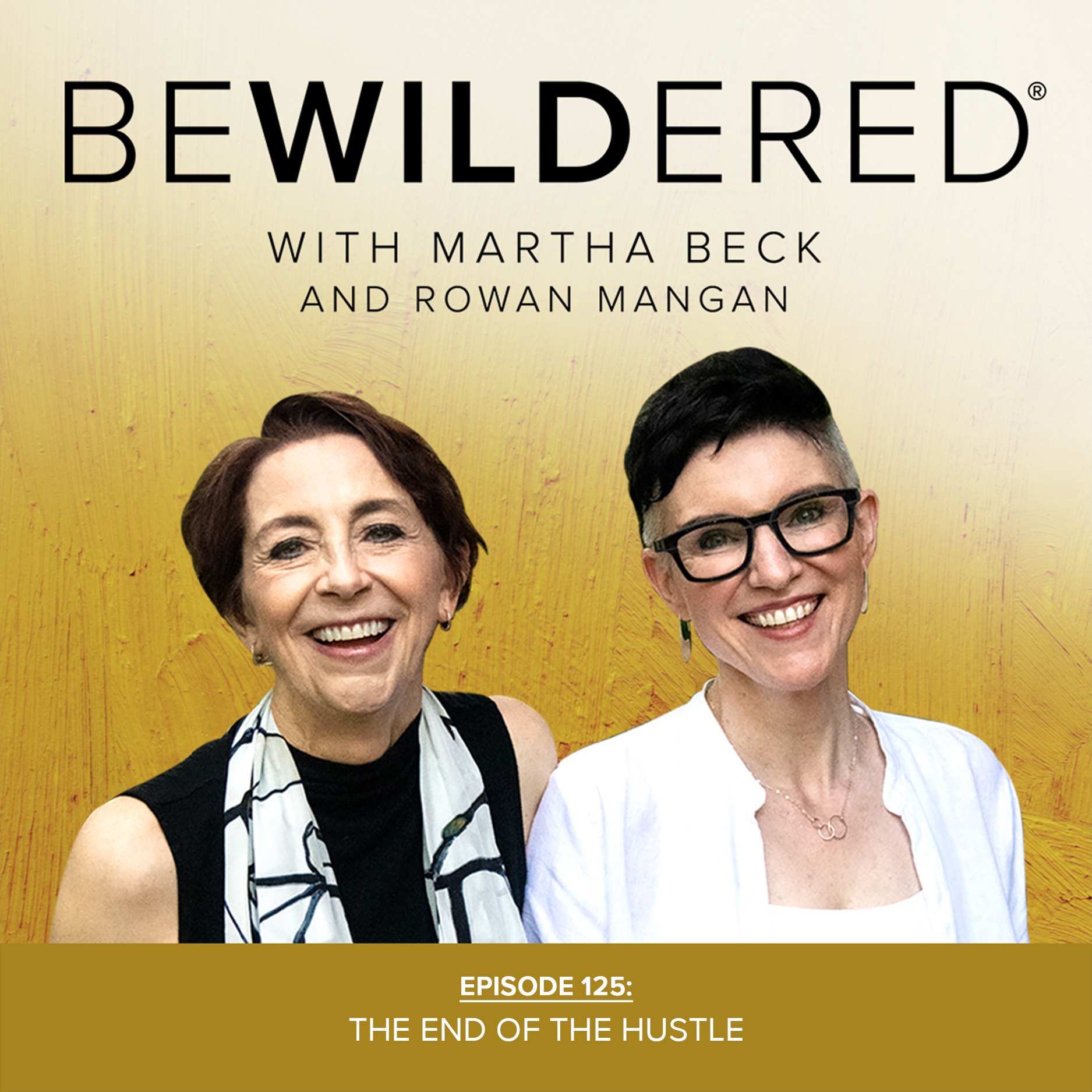
What if you’re not burned out…you just don’t want to hustle anymore? In this episode of Bewildered, we talk about how hustle culture strives to make our lives sterile and abstract: from fluorescent lighting and spreadsheets to profit-and-loss statements and KPIs. We explore what gets lost in that way of life and how to reclaim our wild human power from a world that keeps turning us into pixels. If you're curious what life could look like beyond the endless grind, this episode is for you. Join us!



The End of the Hustle
Show Notes
Lately something’s been shifting inside us… Ro, especially, feels done with the “spreadsheet life” that turns our existence into abstraction, leaving us depleted and disconnected from what truly matters.
In this episode of Bewildered, we’re diving into our exhaustion with hustle culture’s sterile, pixelated world. It’s not burnout we’re exploring, but pure disinclination: We just don’t wanna.
According to various dictionaries, “hustle” has several meanings:
- Work until you find the opportunities you want in life.
- Force someone to move hurriedly in a specified direction.
- Coerce or pressure someone into doing or choosing something.
- Engage in prostitution.
- Obtain something by illicit action; swindle; cheat.
Basically, hustle culture’s message is: “Go out there, be determined, sell yourself like a sex worker, and swindle people, because if you don’t, your life will go to hell in a handbasket.”
It’s true that people who have bought into that culture are rolling in gold at the top of the social pyramid. They’re running the corporations where ostensibly you could come in and climb the ladder until one day you too are rolling in gold…
Except that right now, 52% of Americans can’t pay their monthly bills. We’ve been taught to fetishize the hustle until we fall off the treadmill and into the void. The system doesn’t work.
Recently, Ro grew what looks like Tarzan’s jungle home in our sunroom from some tiny seeds planted only a few months ago. It reminded us that we humans can actually grow our own food. (Right?!) And if we can do that, what other astonishing powers do we have?
We’re being sold our own helplessness around things we actually can do (like grow our own food) because in the spreadsheet world, you have to buy your dinner at the grocery store. So this idea, whether it’s gardening or simply connecting with our senses and not being pixels for a second, feels seditious and revolutionary.
In this episode, we explore the different ways we can reclaim what it means to be human, find our “dirt,” and discover the “Promethean moments” where we realize we can make something with our hands in a wild way.
If you’ve been longing to step out of hustle culture, discover the things that make you say, “I do wanna,” and get back to the memory of being a human animal in a physical world, be sure to join us for the full conversation!
Also in this episode:
- Ro is obsessed with organizing her chest freezer.
- Martha prepares for a fungus among us.
- Murder shows, man cages, and terrifying potato plants
- Ani DiFranco vs. Albert Camus
- Pavlovian ringtones and Harry Menopause
- Gifts of frozen chili for “future lazy Ro”
TALK TO US
You can follow us on our Instagram channel @bewilderedpodcast to connect with our Bewildered community, learn about upcoming episodes, and participate in callouts ahead of podcast taping.
And if you’re a Bewildered fan, would you consider giving us a little rate-and-review love on your favorite podcast player? Ratings and reviews are like gold in the podcasting universe—they help people find us, they help build this beautiful community, and most of all, they help us in our quest to Bewilder the world…
Episode Links and Quotes
- Chest freezer organization tips
- “Hearse” song by Ani DiFranco
- Sir Iain McGilchrist
- Maria Bamford comedy bit
- Candide by Voltaire
- Pavlov’s Dogs Experiment
- “Genie” song by Ani DiFranco
- Milton H. Erickson
- The Last of Us TV series
- 1984 by George Orwell
- Animal Farm by George Orwell
- Fast Facts About U.S. Agriculture and Food
CONNECT WITH US
- Follow Martha on Instagram
- Follow Ro on Instagram
- Follow Bewildered on Instagram
- Join us in the Wilder Community!
- Listen on your favorite podcast app
- The Bewildered Show Notes
- Is there something you’ve been feeling bewildered about? If so, let us hear from you!
Transcript
Please note: This is an unedited transcript, provided as a courtesy, and reflects the actual conversation as closely as possible. Please forgive any typographical or grammatical errors.
Martha Beck:
Hi, I’m Martha Beck.
Rowan Mangan:
And I’m Rowan Mangan, and this is another episode of Bewilded, the podcast for people trying to figure it out. I relate. Do you relate?
Martha Beck:
Me too. Yeah. And this episode is about things I really relate to, like dirt. Yeah.
Rowan Mangan:
I’m dirty. I’m dirty right now.
Martha Beck:
It’s a dirty, dirty episode, people.
Rowan Mangan:
Oh my gosh. The way that we live so often is quite sterile, abstract. There’s a certain fluorescent light, spreadsheets, columns, profit and loss, KPIs. I don’t know. There are things. And we feel like that something is lost in that way of life. What would you say about that, Marty?
Martha Beck:
Yeah. And the reason we know is we hate it.
Rowan Mangan:
I didn’t wanna. That’s what I’ve found.
Martha Beck:
Didn’t wanna.
Rowan Mangan:
I went, you know how you have to dig deep? In hustle culture, you’ve got to “dig deep.” And I dug so deep and at the bottom of all my digging was just this little creature that went, “I don’t wanna.” So that’s what we’re exploring today.
Martha Beck:
And I, for one, am looking forward to it.
Rowan Mangan:
Me too.
Martha Beck:
So Roey?
Rowan Mangan:
Yes.
Martha Beck:
What are you trying to figure out right now?
Rowan Mangan:
Right now, I am trying to figure out what is going on inside me that I love our new chest freezer in the basement. So much that I spend long minutes each day thinking about it. You do? I do. Yeah. It’s a hidden side of me.
Martha Beck:
I find that unnerving.
Rowan Mangan:
Well, there are YouTube videos about how to organize your chest freezer.
Martha Beck:
Yeah. And there are shows online about people murdering other people and putting them in chest freezers. That seems to be the only real use for a chest freezer in murder shows.
Rowan Mangan:
Right. But then if you switch to freezer organizing shows, you’ll find a whole different genre of there. I bet there’s a crossover. What you do is you make food, more food than you need.
Martha Beck:
What?
Rowan Mangan:
That’s okay.
Martha Beck:
What?
Rowan Mangan:
That’s okay. That’s
Martha Beck:
Insane.
Rowan Mangan:
Put it in a Tupperware. Put it in the old chest freezer, Marty. What? Lovely. Put a little label on it. Here’s Chili from January 21st. There you go. And it’s like a little gift to future you via the chest freezer. Here you go, future lazy Ro who doesn’t want to cook. There’s some chili for you. And it goes in the chest freezer like a little promise. And then also in future, I’m going to buy a cow.
Martha Beck:
Yeah.
Rowan Mangan:
Half a cow, maybe.
Martha Beck:
And put it in the freezer.
Rowan Mangan:
Into the freezer,
Martha Beck:
It goes. I certainly hope someone will dispatch the cow before you just stuff it in the freezer. I hope it’s not alive when you stick it in there. I’m sorry. I’m obsessed with the murder thing. Using it as a storage for a body, but also using it as an instrument of death. So this is why I don’t go near the chest freezer. Also, I don’t go near cooking. I never in my many, many years have had the slightest inclination to cook extra food and save it for when I’m too lazy to cook because here’s my secret. Now I get around the whole thing. I never cooked ever. Yeah. It was just like … I mean, I used to make spaghetti. I don’t remember cooking anything else. Birthday cake, spaghetti, Christmas dinner, Thanksgiving dinner. Okay. But look at you. You are cooking, putting things in freezers and it’s freaking me out.
It’s awesome. It’s awesome. Did you figure out why you’re obsessed with it yet or are you just going to leave that?
Rowan Mangan:
I don’t know if it’s to do with Tetris. Oh, okay. It’s like a space. That actually does make sense. It’s three dimensional. There’s different options for what to put where. There’s a whole strategy that goes into it. I’m so glad you are. There’s a whole strategy that goes into it like here are things that are for Adam or here are the bland processed food that Lila will eat and so on and so on. And then there’s all the things that I made and then there’s my seeds.
Martha Beck:
Oh Lord, you and your seeds.
Rowan Mangan:
I put my seeds in there. My special seeds.
Martha Beck:
See, now that sounds weird and biological to me too, like you froze your eggs and put them in. Only you’re calling them seeds.
Rowan Mangan:
I think there’s a lot of things to explore in this conversation and it’s all about your psyche.
Martha Beck:
You know what I figured out, though?
Rowan Mangan:
Don’t point at me like that.
Martha Beck:
I will point. Okay, I won’t. I do a thing that you don’t ever do. I label and file and organize medicine.
Rowan Mangan:
Oh yes, you do.
Martha Beck:
I mean, at a major scale.
Rowan Mangan:
She has a drawer in her medicine cabinet, like her little apothecary of pharmaceuticals.
Martha Beck:
I have huge numbers of plastic drawers labeled by symptom. Yeah.
Rowan Mangan:
Do you know which one is my favorite?
Martha Beck:
I don’t know.
Rowan Mangan:
“Fungus among us.”
Martha Beck:
I had to put that. All the rest of them are completely serious. “Nasal blockage” or whatever. But fungus, it just begs you to write “among us.”
Rowan Mangan:
Of course it does. Yeah. You also are quite happy to leave things in there that expired decades ago.
Martha Beck:
They still work. Hey, they used the antibiotics from World War I in World War II. And they were just fine.
Rowan Mangan:
Yeah, because famously nothing bad happened in World War II. Everyone was fine and nothing hurt.
Martha Beck:
I’m proud of you for the chest freezer.
Rowan Mangan:
Thank you.
Martha Beck:
Yeah.
Rowan Mangan:
What are you trying to figure out?
Martha Beck:
Nothing nearly as interesting as a chest freezer.
Rowan Mangan:
Right? How interesting is a chest freezer?
Martha Beck:
It’s actually not, which makes my thing really, really pathetic. But I think what happened is I was trying to set up an alarm on my phone using Siri. And I said, “Hey, Siri.”
Rowan Mangan:
Your old nemesis.
Martha Beck:
Like 15 minutes later went, “Huh?” Because that doesn’t hurry up, Siri. And—
Rowan Mangan:
She doesn’t respect you.
Martha Beck:
So I said something to Siri, but then before she said, “Huh?” I think I said the thing that I wanted on the alarm, but then she said, “Huh?” And I was like, “Oh.” And I must have said, “Stop, wait, go back.” Because now every couple of hours, I get an alarm on my phone and I look at it and it says, “Stop, wait, go back.” And I’m like, “What? Where? Why? What did I do?” And it’s like taking me back into the annals of my life.
Rowan Mangan:
At what stage did it all go so wrong?
Martha Beck:
Don’t do it. And I’m thinking about everything that I could have averted. Aver is to talk about something, right? She averred? Yeah, aver. Just say it’s true.
Rowan Mangan:
Don’t dig yourself deeper. Just continue on.
Martha Beck:
I could have averted disaster. If I stopped waiting, if I’d gone back and it’s like ruining my life, this alarm that’s reminding me of all the things that I’ve done that are irreparably harmful to myself, the world, and all those who love me. That’s what I’m trying to figure out.
Rowan Mangan:
Maybe you should set a second alarm for a minute later that says, “Actually, don’t worry. You’re doing fine.”
Martha Beck:
That’s genius!
Rowan Mangan:
Keep going forward.
Martha Beck:
Oh, man. If only I can figure out how to do that, I’ll be very… I know how to do it.
Rowan Mangan:
The alarms on Marty’s phone.
Martha Beck:
They’re not that bad.
Rowan Mangan:
Go off and off and off and all through the evening, throughout the evening. And every time she goes like this, the alarm on her phone goes off that says, “Take your other kind of meds or whatever.” And she goes, “Oh, God!” And I’m like, “So turn it off.” No, no, no, no. That would be too easy. Instead, you reserve the right to swear at it and also act really surprised and really pissed off everything.
Martha Beck:
I always am. But you know what? I’ve just been amazed lately.
Rowan Mangan:
Have you?
Martha Beck:
Yes. Listening to how many… You remember Pavlov’s dogs, right? The bell went off.
Rowan Mangan:
I wasn’t there at the time, but I have heard tell.
Martha Beck:
I was in one of the cages. Salivating. I was a champion salivator. They took me to the fair. “Ring a bell, watch her drool.” I was a champion. I could have been something. We’re all… Okay, so they associate. Stop it. She’s in one of her things, you guys. She will laugh for fully half an hour, which I’m acting like it annoys. It does annoy me when we’re recording, but it is one of the reasons that you’re in my life. No.
Rowan Mangan:
It’s one of the reasons you’re in that little cage.
Martha Beck:
Everybody’s running around with cell phones making all these different noises. I have different alarms for all the different things. Now you’ve been crying. Oh, honey, are you okay? And I just thought we’re all getting trained and there are so many different sounds to make us do so many different things. We’re like Pavlov’s dogs with infinite variety. Something goes ding and you know you have to make your bed. And then it goes bah-bah-bah. And you have to go to the chest freezer and rearrange the torsos you’ve been keeping in there.
Rowan Mangan:
Or it goes [Jaws theme] and then you know it’s your mother-in-law calling.
Martha Beck:
I’m the only one here with ta mother-in-law. I’m going to tell your mom you said that.
Rowan Mangan:
Okay. But I will say that I try not to do this too much, but there is a generational component to this conversation, which is that no one… Many of us of a slightly more youthful persuasion would not have any sounds on our phone. At worst, you would have a mild haptic.
Martha Beck:
Why? You have all these sounds you can make. Why would you limit yourself? I love my sounds.
Rowan Mangan:
Oh my god. Remember MySpace and how you could have a song come on MySpace in 2006? It was so cool.
Martha Beck:
I think we’d better get to the podcast. I think we’re just wandering around. And I actually just had an alarm come on my phone that went, ping! “Do a podcast.”
Rowan Mangan:
Do a podcast. All right. Let’s do it.
Hi there. I’m Ro and I’ll be your podcaster for today. Do you know how to tip your podcaster? It’s actually pretty easy. You can rate our pod with lots of stars, all your stars. You can review it with your best superlatives. You can even subscribe or follow Bewildered so you’ll never miss an episode. Then of course, if you’re ready to go all in, our paid online community is called Wilder: A Sanctuary for the Bewildered. And I can honestly say it’s one of the few true sanctuaries online. You can go to wildercommunity.com to check it out. Great. Review, subscribe, join, and you all have a great day now.
Martha Beck:
What are we talking about today, Ro?
Rowan Mangan:
Well, Marty, you know that it’s all about me. And here’s how I am feeling right now in my life. I cannot even. Like, I just cannot. I tried to can, and it did not work.
Martha Beck:
Literally cannot.
Rowan Mangan:
And I realized that there was an Ani DiFranco song that expressed my feelings. First time that’s ever happened to me, actually.
Martha Beck:
Weird.
Rowan Mangan:
Yeah. So weird.
Martha Beck:
Ani DiFranco, you say?
Rowan Mangan:
Just expressed my feelings.
Martha Beck:
How strange. I’ve never heard you mention her.
Rowan Mangan:
Right? So anyway, it was totally random, but she has a song that just starts, “I don’t want to strive for nothing anymore.” And I was like, “Yeah, I don’t want to strive.” I don’t want to strive. I just want to be. And it feels like a very strong feeling that I’m having.
Martha Beck:
It is a strong feeling. She said something that I identified with hard. I don’t know if it was a lyric.
Rowan Mangan:
It’s a line from a song. Yeah.
Martha Beck:
Is it?
Rowan Mangan:
Yeah.
Martha Beck:
It was, “I’m tired of mining my own hillsides.” I identified with that too strongly. I can’t even express it. Yeah.
Rowan Mangan:
“I’m sick of mining my own hillsides for jewels to sell at market.” Yeah.
Martha Beck:
So I hear you. I hear you so deeply. And I actually think a lot of people hear you so deeply. A lot.
Rowan Mangan:
Well, I don’t know how much is the moment and how much is the moment in my life of, not to go on and on, but perimenopause is upon one.
Martha Beck:
One? Upon perhaps more than one out there.
Rowan Mangan:
That’s what I’m thinking. That’s what I’m guessing. And it has brought on the “I don’t give a fuck” so hard for me. And it’s just an interesting… I don’t want to say predicament because it’s not strictly a predicament. It’s just like—
Martha Beck:
It kind of is.
Rowan Mangan:
—aa persuasion. Well, I mean, this is the thing, right? It’s a predicament because of the culture that is my context.
Martha Beck:
Right.
Rowan Mangan:
Without that context, I would just be quite happy.
Martha Beck:
We think. We can’t test that. But I don’t think it’s just you. I don’t think it is just… Did you say hairy menopause? That’s what I thought. “Hairy menopause.” I’m like, okay. I don’t know what the symptoms are for you.
Rowan Mangan:
Harry Menopause. He’s my friend.
Martha Beck:
Hairy men. Okay. Forget it. What I was going to say is I basically have made a career because we live in a cultural context that forces people to strive and strive and strive. And believe me, you don’t have to be in menopause or perimenopause or whatever. Men hit that in what I call the man cage where they’re just trapped, so trapped culturally. Women hit it when they’re trying to, like you do, everything, raise a kid, have a career. There comes a moment, I think, for almost everybody, maybe not. I think some people are able to just keep working and working and then retire and be happy. But a lot of us hit the, “I cannot strive anymore.” And it’s like when people run marathons and at mile 20, you run out of all the glucose in your muscles and they call it hitting the wall and you’re running away just fine. And then it is literally like you run into a brick wall. You’ve got no glucose in your muscles. You can’t run. People just fall down. And there are ways that they work around it and everything, but that’s sort of an infamous thing. And it’s a biological deficit. You can’t force your way through it.
Rowan Mangan:
Yeah. And I think I’m talking about something very different.
Martha Beck:
Oh, okay.
Rowan Mangan:
I’m not talking about when you cannot. I’m talking about when you just don’t want to anymore. It’s different. I’m not burned out.
Martha Beck:
Right.
Rowan Mangan:
I’m disinclined. I don’t want to. And it’s different because in the past I’ve been able to generate some fun in the doing of the things for the making of the money or the blah, blah, blah. And it can feel a bit like a game and you can find ways to get yourself like, “Rah, yeah, we’re going to do this. Let’s move some units. Yeah.” And it can be good. And now I’m just like, “I don’t wanna. I don’t wanna.”
Martha Beck:
That, that. I think that is even more universal, if anything. But it’s so… Here’s the thing. When you said it’s not “I can’t, it’s a disinclination,” I could feel inside me the socialized reaction, which is: “You don’t wanna? Too bad.” I mean, one of my mother’s, she must have said this every other sentence: “We all have to do things we don’t want to do.” And boy, did I take that to heart. I didn’t want to do anything that I was doing, but I just knew that I had to do it. So when you say I don’t want to, it’s like, “Clutch my pearls. She’s breaking the rules here.”
Rowan Mangan:
And it’s okay. I guess this is the thing is that where you took what I said was towards what kind of would be culturally okay.
Martha Beck:
You left it all on the field, girl.
Rowan Mangan:
Yeah. No, I didn’t. I just want to keep some. For myself. I don’t want the field to get it all.
Martha Beck:
I really like this.
Rowan Mangan:
Yeah, I know. It’s quite seditious.
Martha Beck:
I know. It’s deeply seditious. In fact, it’s probably… I mean, talk about the enemy of capitalism, right? For somebody to just go, “I don’t wanna.” I mean, that’s in 1984 or Animal Farm, that is not something people could say in the well-structured materialist farm. Yeah. This is seditious stuff. So what are you going to do about it?
Rowan Mangan:
Well, there’s so many different ways in which I feel like I’m reclaiming something about what it is to be human. And you poo-poo the perimenopause thing, and I think you’re wrong to poo-poo it because I feel as though there is a qualitative difference to how I feel, like how I feel about interfacing with the world at large now than I did a year ago. And the “I don’t give a fuck” is really upon me. And with it comes this sense of like, okay, so here’s the thing. When you’re burned out, you don’t have any energy to give anything.
Martha Beck:
Right.
Rowan Mangan:
I have energy, but I want to keep it and I want to direct it at things that I want to do. And I want to find power in the things that I can do and I want to stop diluting my own power to give some to The Man.
Martha Beck:
And you’re not even living in a way that is giving some to The Man. You don’t go to the office or whatever, but you do have to hook into the social mores around taking a kid to school.
Rowan Mangan:
Yeah, that’s not it. It’s the spreadsheets.
Martha Beck:
It’s the spreadsheets.
Rowan Mangan:
It’s the spreadsheets of it all. And I mean that in a larger sense.
Martha Beck:
Right, right, right.
Rowan Mangan:
Okay. So here’s the thing. It’s abstraction. It’s layers of abstraction in the corporate world that we live in, the way that we work, the way that we, the sort of white-collar work, whether it’s corporate or public service or whatever. It’s all kind of fluorescent lights and computer screens. And then—
Martha Beck:
You’re separated from the means of production.
Rowan Mangan:
And that’s the whole thing is that I’m realizing we’ve moved to this land and I’m suddenly like, holy shit, land, land, earth, potential for things. And this is where we’re coming into like taking power back and out of abstraction, out of the spreadsheet life where my labor is turned into abstraction upon abstraction upon abstraction. I don’t even know what I’m getting paid for. I feel like at some level, what I’m getting paid for is my own misery. It’s a compensation prize because I sat at a desk being miserable for eight hours.
Martha Beck:
It’s very weird how everything has been turned into a sort of factory line that now is—you get a factory line and everybody does their widget, but then you get management in there to manage the factory workers. But how do you manage the managers? You put them on a sort of quasi-factory line where information and leadership is part of what they’re creating. Then you have to have higher managers to manage them and it’s all factory.
Rowan Mangan:
Exactly. And then I think, and there’s that. So that happened, but then I feel like the bit that I’m really in complete revolt against is that above all of that that you’re describing is where the culture has fetishized the hustle, the hustle itself. The actual… So there you are, and you’re running on a treadmill under fluorescent lights, and you’re not running from anything, you’re not running towards anything, but you make the running itself into something glorious, and you talk about it, and the difficulty of the pointless running becomes your identity until you fall into the void at the end.
Martha Beck:
You get flipped off the back, because you can’t keep up.
Rowan Mangan:
Yeah. And then you’re done. And I don’t wanna.
Martha Beck:
Yeah, I hear you. I don’t wanna either. And it’s interesting how everything pulls toward that, because many, many years ago, I just grew up thinking I would be a professor because my father was a professor, and that’s how people made money in my world. But when I got into it, I realized I was writing articles that would be read by an average of seven people about subjects like parsing some previous sociologist’s work or at the very most massaging some numbers in a huge data set and nobody would read it. And then I would get tenure based on having jumped through all these hoops. And nothing that I was doing, not the teaching, not the writing, not the meetings, not anything, had any real connection with transfer of value. So I was like, I want to write something people would read for fun or to feel better, that I can give it directly to a person and say, “It has something for you.” So yeah, I made that decision a long time ago, but then publishing itself tries to become that, tries to pull you in. And you end up working with people in the marketing department and the sales and all these… And all of it has to do with people who are sitting in their offices who get paid no matter what happens, whether your book gets out there or not. It immediately starts to stratify and objectify. It’s like, it’s such a powerful meme. And I mean that not in the sense of social media, but of an idea that spreads like a genetic disease.
Rowan Mangan:
Well, I think it’s a reflection of the way that our psyches are structured in some way because we’ve talked before about the way we do that with spirituality as it becomes the institution of churches or whatever, like organized religion is… Yeah, I think we take something organic and we want to make it organic and therefore inherently unpredictable and changing and plastic in a way. And we want to make it predictable and like to follow the rules and boom, then we’ve…
Martha Beck:
Yeah. And it’s another example of my obsession, because I wrote a book kind of about it, but the idea… Sir Iain McGilchrist in England, brilliant philosopher, neurologist, he says, “The whole culture behaves like people with a right-hemisphere brain stroke,” like the right hemisphere of the brain is missing because all of that, like lining things up, chopping up jobs, assigning them to specific people, abstracting everything is all part of the left hemisphere. It happens mainly in the left hemisphere, and that’s all we use in this particular culture. We only use half our brains and the half that we decide is meaningless is actually the part of us that experiences things as meaningful for any reason whatsoever. When you’re just into the stratifying and the factory-labor, analytical mindset, there is no meaning. And that’s where I’ve found so many people, not saying “I don’t want to,” but just kind of wandering in to talk to me going, “What, what…Is there any purpose for me, my existence at all?”
Rowan Mangan:
Yeah.
Martha Beck:
Because they’ve been sucked into that.
Rowan Mangan:
Well, because you have become abstracted yourself. You’ve become an abstract thing because you can only be defined in terms of your value to the culture, and value can only really be defined quantitatively. And so I think that’s why we’re on our treadmill to go, “I’m running at this many miles per hour on this percent incline and my heart rate is this when I hold onto the thing” because we just want numbers for it.
Martha Beck:
And I will get a prize for it. Though it changes nothing in the world.
Rowan Mangan:
If I hit this KPI, then I get a prize and that means something because it’s a number. And we’ve lost… We haven’t lost it, but there’s a tendency in the culture to funnel us into a way of life which is lost from our own experience of the sensuous, of being human.
Martha Beck:
Constant, thankless labor for no reason. But, but there is one overwhelming reason: “If you don’t do this, your life will go to hell in a hand basket. All your loved ones will die. You’ll become a bag person and freeze to death on the sidewalk.” And I cannot tell you how many people have expressed those fears to me. People with vast fortunes, people who are working in crummy jobs where they’d be so much better off if they quit, they’re all like, “No, I can’t quit. Can’t quit the hustle. You got to hustle.” And that’s very American. You’ve pointed this out, although Australia…
Rowan Mangan:
Yeah not exclusively, but the Americans are very good at it.
Martha Beck:
It goes to a pretty extreme level in Americans, I think. But this whole hustle thing, the whole concept of hustling is anathema to me. And one time, I had just written a book and in one of them, in one of them, “I had written a book in one of them.” I had written a book and in it, in one chapter, I talked about hustling as—the one word hustle—as being sort of the epitome, the description of modern culture. And can I tell you? I have what I wrote right here. Can I read you what the hustle is? Because you said—
Rowan Mangan:
Class? Martha would now like to read from her assignment.
Martha Beck:
Yes. These are definitions of hustle that I got from dictionaries, not the same dictionary. One was an urban dictionary.
Rowan Mangan:
“The dictionary defines…”
Martha Beck:
That’s how we start every podcast. Seriously. But the reason I like this is it’s one word and it is fully descriptive of the whole work culture you’re talking about. Okay. One: Hustle means to have the courage, confidence, self-belief, and self-determination to go out there and work it out until you find the opportunities you want in life. That was in a dictionary. Two: Force someone to move hurriedly in a specified direction. Go, do, go, do.
Rowan Mangan:
Northeast.
Martha Beck:
Three: Coerce or pressure someone into doing or choosing something. Four: Engage in prostitution. And five: Obtain by illicit action, swindle, cheat. So there it is. It’s like, “Go out there, be determined, and you will sell yourself like a sex worker and you will swindle people because that’s… If you don’t do that, you’ll end up a bag lady.” And it is true that people who seem to have done, who have bought into the culture, are like rolling in gold at the top of the social pyramid. And they’re running the corporations where ostensibly if you come in at a lower managerial level, you can climb up until one day you too will be rolling in gold, except that right now 52% of Americans can’t pay their monthly bills and they’re working hard. And I don’t think they wanna. I don’t think we want to.
Rowan Mangan:
No.
Martha Beck:
I mean, when I read that—
Rowan Mangan:
We’re kind of collapsing different things here, but I think it’s impossible to live the hustle in our current economic circumstances. I think it’s like we’ve exaggerated the problems so much. It’s like those dogs that get overbred until German shepherds can’t stand on their back legs and stuff. And I think it’s sort of like that where the corporate choreography has got to a point where, yeah, you work three jobs because each job is designed to not pay you enough to be eligible for healthcare benefits. And so you earn too much, but you earn not enough. And all of this sleight of hand, which is part of the hustle, right? It’s built into the institution of hustle that we are implicitly subject to, and I want to pose the question: “But are we?” Go, Martha, go ahead.
Martha Beck:
Well, first I want to say that when you said you could find some fun in it, like, “Yeah, let’s move some units!” That actually is the highest level of satisfaction and enjoyment you can get doing this hustling. And it melts in the rain—it doesn’t really support you psychologically, even if it supports you physically.
Rowan Mangan:
Because it’s built of spreadsheet cells. It’s not built of anything that you can smell or touch or taste.
Martha Beck:
And I think, here’s my theory, two things. Number one, I think a lot of people are sick of the hustle. Some people seem to love it. God love you. Keep going. Bless you. But a lot of people don’t wanna. I don’t wanna. Does everybody wanna? Find your fuck it, right? So first thing is, it’s not working at all. For 52%—I’m not talking about 52% of people aren’t filthy rich. 52% of Americans can’t pay their bills, monthly bottom-dollar bills. Okay. So something’s very badly broken in an economy that’s doing that. Two, so historically, we’ve reached this time where the hustle, you’re asking people to just put their joy and their happiness and their love in this little weird container for the sake of not going broke and go broke doing it.
Rowan Mangan:
Yeah, and go broke doing it.
Martha Beck:
It’s insane, right? So historically, there’s something going on. But second thing, I can see you not wanting to hustle. I see why you don’t want to because, not because you’ve decided you’re too lazy or tired, because you wanna. Right now, you wanna more than I’ve ever seen you in your life, you just don’t want to do the things that the hustle says you should do.
Rowan Mangan:
I discovered a secret. They don’t want you to know about this. So just keep it really quiet. We can make food. No, seriously. We can actually make food.
Martha Beck:
Yeah. Well, she’s… Actually, they may think you’re talking about the chili that you put in the freezer. So a lot of people can make food in that sense. You’re talking something more primitive, deeper, scarier, like literally making food.
Rowan Mangan:
Take your seeds out of the chest freezer. That’s step one. I cannot stress enough how important the chest freezer is. Take your seeds out of the chest freezer, put them in the soil, water them, get a very expensive grow light.
Martha Beck:
Okay, but to get the grow light. You have to hustle to get it.
Rowan Mangan:
Because you are outside of the capitalist system. So make sure it’s a really good grow light. Okay. And then the seeds, they grow. And after time you put them in a bigger, expensiver pot and they grow and grow. And then they start to make a flower and you get your electric toothbrush. And you jiggle them.
Martha Beck:
You stimulate them.
Rowan Mangan:
You have to jiggle the flowers.
Martha Beck:
So that they pollinate themselves.
Rowan Mangan:
So that they sex themselves. I don’t make the rules. Okay? This is how our ancestors did it.
Martha Beck:
I mean, this is really—
Rowan Mangan:
This is called holistic agriculture from the chest freezer to the electric toothbrush.
Martha Beck:
Electric. You’re not going in there with a cheap manual toothbrush.
Rowan Mangan:
What would be the point?
You get the most expensive electric toothbrush to go in there and get those happy flowers sexing each other.
Themselves.
Martha Beck:
Oh, themselves. Of course. That’s why they need the toothbrush. Anyway.
Rowan Mangan:
Why we all need the toothbrush. Let’s be honest.
Martha Beck:
But here’s the thing. I saw this begin for you. You had this sort of—
Rowan Mangan:
I was like a seed.
Martha Beck:
No, you weren’t. You were more like a fairy that no one can see in the garden floating around going, “Someday I’ll make food.” And you kept talking about it. “Someday we’ll have a garden. We’ll have a garden there, Marty.” I was like, “Yeah, sure. Right.” Because I have never been able to make anything grow. And no one that I knew growing up knew how to make anything grow. Literally, our front yard was just dirt. It was so embarrassing. Anyway, nothing grew. So right around Christmastime, you get this hobby and you buy these little plastic things and you put soil in them and then you put little seeds in there. And you did quite a lot of them with a grow light and everything.
Rowan Mangan:
Oh, I didn’t think it would work very well.
Martha Beck:
I know, neither did I. I was like, “That’s not going to work. Have you seen my front yard growing up?” So then right around New Year’s, I went by and I looked and there was a little fish hook of green, like no thicker than a hair poking up above the soil. And I was like, “What the actual fuck is happening?” And then after that, I would go and check them every hour and they started coming up all over the place. And y’all, for real, we have an entire room of our house that looks like Tarzan’s jungle home. It is so full of these massive plants. They just keep growing.
Rowan Mangan:
I was really way more successful than I thought, and this is to the point, is it’s like, oh my God, the abundance is mind boggling.
Martha Beck:
Stop them.That’s the thing. You’ve had to start to kill some tomato plants.
Rowan Mangan:
I had to kill some. I had to cull some.
Martha Beck:
That’s farm life, though, right?
Rowan Mangan:
That’s farm life. It breaks your heart.
Martha Beck:
Don’t name them, that’s for sure.
Rowan Mangan:
Yeah, too late.
Martha Beck:
And you started composting and I was like, “Oh my God, welcome to Woodstock. It’s happening.” But then there’s a bowl of compost that you haven’t allocated to different monstrous, Shop of Horrors plants that are just taking over this room of the house. And out of the compost, because there were potato eyes that were in there that didn’t get smooshed up enough, there are potato plants growing up there that would tackle you.
Rowan Mangan:
That’s not what’s happening.
Martha Beck:
What’s happening?
Rowan Mangan:
There’s just some potatoes in there.
Martha Beck:
You just put potatoes in the compost?
Rowan Mangan:
No, just temporarily.
Martha Beck:
And then watered them? Because they’re strong, Ro. I tried to—
Rowan Mangan:
No, they were in a cupboard like that.
Martha Beck:
I tried to confront one the other day and it was terrifying. You just put these seeds in the dirt, you water them. This is revolutionary. This could change everything. Food grows out of the ground.
Rowan Mangan:
Oh my God, right?
Martha Beck:
What?
Rowan Mangan:
Yeah. Yeah. And this is why being separated from the means of production is a really big fucking deal.
Martha Beck:
Just to clarify, are we telling everybody out there you can quit your job and start growing tomatoes in your sunroom? We call it the sunroom because it gets sun.
Rowan Mangan:
I think that we’re being sold our own helplessness and powerlessness around what we actually can do because the spreadsheets have got us convinced that we live in a spreadsheet world and in a spreadsheet world, you have to buy dinner at the grocery store or at the drive-through. And so this idea, I don’t know if it’s gardening or if it’s just connecting with our senses again and just stop being pixels for a second. And I don’t know. I don’t want to be too hippie about it, but I also feel like it is seditious to grow a garden at this moment in time.
Martha Beck:
It is.
Rowan Mangan:
It is. Even if it’s in one of the vertical things that people can do in tiny spaces.
Martha Beck:
I know. It’s crazy. When I was doing a lot of research on NGOs in rural developing countries, I saw all these things about how you could grow enough family to—sorry, grow enough food.
Rowan Mangan:
Grow enough family for your chest freezer. In they go!
Martha Beck:
Grow enough food, they said, for a family of four, on a piece of earth the size of a door. And then I had this thing, in one of my books I talked to about how I had a client who was a lawyer and she was super successful, lived in a penthouse in Manhattan, and she was dying of anxiety. And I did my usual things like, “Notice what’s going on inside you…” And one day she came to an appointment, Zoom appointment, she was all happy. And I said, “What are you doing?” And she said, “I’ve started farming.” And she took the computer in to this glossy Manhattan apartment kitchen, and she was growing peppers and she was growing squash and she was growing—and she was so happy. And I’ve thought about that as I’ve watched you do this because we went to a seed-starting class together. I went to a seed-starting class with you.
Rowan Mangan:
It was a date.
Martha Beck:
And we all got to plant seeds. There were like 10 other people there. We planted seeds the way the teacher told us. And then we did that. And we came home and Roey put her seeds in the sunroom and they all started growing. In like 10 minutes, they were like, “We are here. We wish to give you food.” Mine have not.
Rowan Mangan:
Well, you abandoned them on the kitchen counter for a while. Get them dry out. Because really who cares?
That’s the thing.
Martha Beck:
I did not let them dry out. They were soggy. They were fully sogged.
Rowan Mangan:
You didn’t close off the end of their bag to create the greenhouse environment they needed for germination.
Martha Beck:
Well, see, this is what I’m talking about. This is why I not only never grew food, I never cooked food. I have very little interest.
Rowan Mangan:
I’ve never known—
Martha Beck:
That means of production.
Rowan Mangan:
I’ve never known anyone who cares less about food than you.
Martha Beck:
I do not care.
Rowan Mangan:
You do not get any pleasure from food.
Martha Beck:
I do. I do when I’m hungry. There’s nothing like food when you’re hungry.
Rowan Mangan:
All right.
Martha Beck:
But I really don’t care what it is. As long as it’s not actively running from me or molting or anything. If it’s food, I’ll eat it. But here’s the deal. There are other means of production that I have experienced. I call them my “Promethean moments.” Moments when I’ve realized, holy crap, we’ve been sold a bill of goods. We could totally do this without the system. And one was for the first time I was taught to make fire with no matches, right? Yeah. With a fire bow. I forget even now what they call it, but you do your little—
Rowan Mangan:
A special thing.
Martha Beck:
Yeah. You have a rock and another rock and wood and kindling and you get it all together and you get it up to 800 degrees. And there’s this moment when you get the tinder. Yeah, you get the fluff, whatever it is, tree moss or whatever you’ve got, and you drop your ember into it. And then you start feeding it oxygen by blowing into your hand. And it starts to smoke. And then it starts to billow with smoke. This goes on for a gratifyingly lengthy and tense, suspenseful time. And then you take one breath and go, and it just bursts into flame. It doesn’t send out a little spark. It just goes phwoom!
Rowan Mangan:
Best feeling ever.
Martha Beck:
And I remember watching that and going, “We can do anything!”
Rowan Mangan:
This is it. This is it.
Martha Beck:
Yeah, yeah.
Rowan Mangan:
And why do we think we can’t just do it?
Martha Beck:
Yeah. Well, there are… Don’t you run into… Like, if we tried to set up a farm and start making fires for ourselves in a city somewhere, they would be screaming at us about zoning and people would come and beat on us with rocks and sticks. Is that not true? That is my supposition as a sociologist.
Rowan Mangan:
So you’re just like, all right, so we’ll go out into our suburban front yard and we’ll get our little tools and we’ll go blow on the fire, blow on the fire. No, can’t we just…Let’s do this in stages. But first of all, let’s have our peppers, pipper peppers on the kitchen counter. And just every step back into nature, our nature, which is to tend and foster life and not pixels, every step we take back in that direction is a reclamation of this power and a recognition that we have been tricked into thinking we don’t have the power.
Martha Beck:
It has been revelatory watching you because I see you going into that room, and you’re just completely surrounded by this wall of green that came in a paper packet six months ago. Not to mention, there was a time when Lila, our five-year-old, was smaller than a grain of salt and being stored in a freezer somewhere. Like that—
Rowan Mangan:
Chest freezer.
Chest freezer. Exactly. And you start with fire and agriculture and you end up being able to do that kind of magic. That’s insane. So the means of production are very… They go to the high level of technology as well. And some people, I’ve watched you get your hands in the dirt and then this miracle explodes around you. But some people’s hands in the dirt will be high technology. My hands in the dirt was when I was totally physically disabled, completely overwhelmed with mothering and trying to work and everything. And I just had to figure out how to live. And that’s—I’ve always, I used to carry around books in high school. Here’s my theories about how to live. And then I started talking, living them out loud, kind of. I’d tell people about them, and they started paying me just to tell them about it. And I was like, “Surely, you cannot be serious. This is just what I do.” And they’re like, “No, no, we want to pay you.”
Yeah.
Martha Beck:
And that was me finding, getting my hands in the dirt.
Rowan Mangan:
Right. Because what you discovered was that you had access to value that could be exchanged that you could offer and you could take to market. And so you could generate your own living by creating value, even though the value was in theory, not tangible. It feels tangible to people when you can relieve their suffering. And that’s part of being human, right?
Martha Beck:
Yeah. So I mean, when you talk gardening and cooking, I’m like [snore]. But when you talk micro-entrepreneur or micro-self-sufficient person in the world, I start to get very excited because I really believe everybody has a version of the dirt. I had a client, one of my very first clients, loved the Tetris of fitting together three-dimensional objects. You said it at the beginning.
Rowan Mangan:
Oh my God, she would’ve loved my chest freezer.
Martha Beck:
I know. And I was like, “What do you enjoy?” Anything. She was so depressed. She didn’t want to. She was burnt out and she’s like, “Well, this might sound weird, but I love arranging three-dimensional objects.” And I did a little research. Turned out there were really, really good opportunities for doing that and exchanging it for value, barter, money, whatever. So it’s just, can you find your dirt? Can you find where you want to put your hands in the soil? And it’s not the ways you’ve been taught. It’s never going to be the way you’ve been raised to think, I believe.
Rowan Mangan:
We’re not going to find it in the hustle.
Martha Beck:
No, that’s right.
Rowan Mangan:
In the mentality of the hustle, there isn’t a finish line where you can sit down and look at your gut.
Martha Beck:
Oh no, never. Never.
Rowan Mangan:
There’s that Maria Bamford line, she’s talking about in LA and everyone’s like, “What are you working on? What’s your current project? What are you working on? What are you working on?” And it’s so exhausting that finally she’s just like, “I finished.”
Martha Beck:
I’m done. I finished early. She does it so much better than we do.
Rowan Mangan:
How dare you, I just killed that.
Martha Beck:
Hey, that’s her dirt. Comedy is her dirt and she fricking kills.
Rowan Mangan:
Yeah, she is the one.
Martha Beck:
Yeah. So devil’s advocate position. We’re sitting here going, “Yeah, we grew up and went to graduate school and now after decades and decades of life, we’re finding out that we can grow things in a garden.” And my devil’s advocate position is, aren’t there a whole bunch of people out there who are like, they’ve been out gardening and being off the grid and like storing ammunition? I mean, I grew up among a very millennial people, people who believe—
Rowan Mangan:
And she doesn’t mean the millennial generation.
Martha Beck:
No. I mean, as in “There’s going to be a thousand years of peace when Christ comes, but first there’s going to be a nuclear holocaust, and only the Mormons will survive because we’ve grown food and stored it in our chest freezers and we have a two-year supply of everything we need and a lot of ammunition because the non-Mormons are coming and the people of God are going to need to kill those people.”
Rowan Mangan:
Obviously.
Martha Beck:
Yeah.
Rowan Mangan:
Just like Jesus said.
Martha Beck:
Just like Jesus said. So how are we not just late-to-the-party homesteaders here? Are we? Is that what we are right now?
Rowan Mangan:
You’re sort of talking about like crazy libertarian preppers.
Martha Beck:
Well, that’s what comes to mind.
Rowan Mangan:
Yeah. I mean, I don’t think homestead has to have that kind of overall—
Martha Beck:
See, I don’t even know.
Rowan Mangan:
Yeah. I mean, maybe? But remember in The Last of Us when there was that crazy guy and he survived the zombie invasion and then he fell in love with a beautiful Australian man?
Martha Beck:
Episode four, was it?
Rowan Mangan:
Yeah.
Martha Beck:
You gotta watch that. It’s really good.
Rowan Mangan:
So think about that. Maybe everyone’s just waiting for a beautiful Australian man to crash through their defenses.
Martha Beck:
Are you a man?
Rowan Mangan:
I’m not a man, personally.
Martha Beck:
Well, two out of three ain’t dad. Beautiful Australian. But yeah, I do think that we buy into the hustle mentality, that we wear ourselves out, and that we get to the point where we don’t want to. And nine out of 10 people will say, “I have to do it anyway,” because that’s what they’ve been told by everything around them.
Rowan Mangan:
Did you know that when we buy food from the grocery store, only eight cents in the dollar, or so I’ve been told, is spent on the actual food, on the raw food itself. And the rest is all the costs associated with transport and treating and infusing with all the chemicals and blah, blah, blah, blah, blah. I’m not MAHA. I’m not going in that direction. I’m crunchy, but not that kind of crunchy, but I’m just like, I really feel that there is a massive con being enacted on us in the form of the hustle, and I think we need to get hip to it. And it doesn’t have to end with you planting a garden by any means, but like get hip to it so that you can find a way to circumvent it in a way that feels real and tactile and organic and physical to you.
Martha Beck:
Yep. The departure from that lifestyle into the pyramid-shaped corporate lifestyle came with one word, and that word was surplus. When agricultural labor started, people realized we can grow more than we need. And then immediately people said, “I want to control more than I need. I’m going to take it all.”
Rowan Mangan:
You want it? You want to take mine?
Martha Beck:
Yeah.
Rowan Mangan:
Well, fine. [gunshot sounds]
Martha Beck:
So you have a chicken stand, and you’re selling fried chicken and it does really well, but now you want to do, “Okay, people like this chicken. I’m going to get a chicken farm with a thousand chickens. Now I’ve got to make the chickens all be in rows so they don’t have lives, but I got to raise them and I’ve got to have people to pay to put things in with them. And we need trucks and we need…” It’s all for the purpose of growing an empire. So this is what I want to say right now, right here, is if you need to grow an empire to be happy, the hustle is probably the way you should go. But if you don’t need an empire, if you just need a freaking life, if you want things like peace and happiness and loved ones, I’m not saying there’s—
Rowan Mangan:
And the smell of tomato plants.
Martha Beck:
Yes. Yes. Sorry. I sound very judgmental of people who own huge corporations because, in fact, I am.
Rowan Mangan:
Yeah. No, that’s fair.
Martha Beck:
But yeah, it’s this madness over controlling vast amounts of material and wealth and control over other people’s lives. I mean, those things go to a very sort of venal part of the reward system for human beings. But what you’re talking about is what Voltaire says at the end of Candide. If everyone—
Rowan Mangan:
People are always comparing me to Voltaire. I’m sick of it.
Martha Beck:
I know. It’s the nose, honey. No, no, you don’t have Voltaire. Your nose is perfect. And so is his, but in a very different way, a French, like earlier period.
Rowan Mangan:
What did he say?
Martha Beck:
He said the only way to make life livable is if everybody just sticks to cultivating his own garden or her own garden. He didn’t say his or her. He said his because he was still part of the patriarchy. Anyway, if we all can cultivate our own gardens, there’s a sanity in that. And I think, I mean, he thought long and hard about it, and I think he came to a pretty good conclusion.
Rowan Mangan:
“Men are better than women.”
Martha Beck:
No, no. “Gardens are better than other things.” Gardens are better than, I don’t know, being a serf or whatever people were, a peasant. They were still in the fields. They just didn’t have their own gardens. Go on.
Rowan Mangan:
RIt reminds me of Ani DiFranco lyric.
Martha Beck:
Does it?
Rowan Mangan:
Amazing. Because I really think that so often what we’re coming down to in this conversation is between the tactile experience of having a beating heart and skin in this environment that is in so many ways inhuman or a-human. And so anyway, Ani says, “Let us look down at our hands.” I was like, “Is this too cute?” And you were like, “No, it’s okay.” “Let us look down at our hands and remember whe’re armed.” And it’s kind of funny, but it’s also kind of like that’s, I mean, when we talk about gardens, I’m really just talking about, “Oh my God, I have a pair of hands and they’re not just built for typing.”
Martha Beck:
I had such an interesting experience about this, it’s kind of woo, I guess. I was in a yoga class and we did this—
Rowan Mangan:
It can be kind of woo-woo.
Martha Beck:
Anyway, we’d done this impossible, it was a very brutal yoga class because that’s what Westerners do with yoga.
Rowan Mangan:
Right. Well, in fairness, so do Easterners.
Martha Beck:
Yeah. Well, we’d been holding this impossible pose for a very long time and I was going slightly insane. And I looked at my hands and suddenly it was like something was looking at them that wasn’t really identified with me. It was just this amazed, interested, huge consciousness. And it looked at these hands and it went, “Oh, they can do all kinds of things. I could do so many things with this.” Like you’ve got this, this machine? Let’s do some things.
Rowan Mangan:
It’s so cool. I was just breaking bits off a cookie earlier and eating them. And I just had that moment of like, “Oh, look at the little monkey with its little hands and it can just use them.” Can just use it. It doesn’t need—
Martha Beck:
It can use it for so many things, right?
Rowan Mangan:
Just break up a bit of cookie, put it in your mouth.
Martha Beck:
The amount of ideas you can materialize with these hands, if you take away the cage, this, as I said, I call it the “man cage” because men get even more stuck in the hustle thing than women, because women know, “If I want to have a family,” there’s sort of room because women bear children and you can’t actually throw the—
Rowan Mangan:
It’s a different cage.
Martha Beck:
It’s a different cage. And believe me, men get much, much more of the power, wealth, and status. I’m not under any illusions about that, but they also get really mind-blind to anything but the hustle. A lot of them do, at least those that come to me. And when you take off the blinders that the culture has put on about how you have to hustle to make a living, these arms, these hands, can do so many things, right? I mean, it’s just astonishing beyond words.
Rowan Mangan:
We saw a thing that was a short video that was talking about in this economic environment, if you are underemployed, you should try growing food, that you can cut through so many of these tricks that the culture has constructed around this eight cents out of the dollar or whatever. We can circumvent them. And it’s just the beginning. It’s just like poke your finger into the part of the story that says you’ve got to buy pre-cooked food at the grocery store or the drive-through on your way home from work at 9:00 PM. And we just start deconstructing that a little bit around food. It’s such a basic process of being human.
Martha Beck:
But think about that. You have to earn a dollar for every eight cents of food you buy at the store. So if you buy a seed packet for $2 and later you’ve got 28 tomatoes, like every tomato you eat is 92% cheaper than the one you bought at the grocery store because I mean, you’ve put your time into it. The thing I loved about that is it said any member of a family who is underemployed should start growing food because you can add, because it’s not individualized either. It’s incredibly difficult to support a whole family by one person’s labor, right? Impossible.
Rowan Mangan:
Yes. And also, I just need to put as a little side note in this is that part of the process of being abstracted into pixels that the culture does to us in the way we live has also led to so many people being isolated in living alone, not being part of community, not being part of a social network in which these kinds of processes like growing food—
Martha Beck:
Part of the lie.
Rowan Mangan:
It’s part of the lie.
Martha Beck:
You are just an individual cog knocking around in a meaningless universe. You’d better sit under the fluorescent lights if you want to buy that food for eight cents of food for a dollar. It makes me think, I think I’ve mentioned this before on the podcast, but there was this famous, I think it was Erickson, famous therapist. And one of his most famous cited cases was he had this woman who was very isolated and very depressed and he gave her a project which was to— She liked growing African violets. That was the only thing she liked. So he told her that she should go through the obituaries and take an African violet to the families who’d lost someone in her neighborhood. And she started doing this, and then she started becoming well known for it. And then she became like this famous legend in the city where she lived. And she got so many friends. She was so happy. And it was all because she went back to touch the soil, right? It was all… I’m getting quite excited about you touching the soil. That’s why I said if there’s a member of the family… But I do think that everybody can find their own dirt. I really do. When you were quoting Ani DiFranco, I was remembering two quotes by Albert Camus.
Rowan Mangan:
That just sums up everything about who you are and who I am.
Martha Beck:
I am old. You are young.
Rowan Mangan:
You are over-educated.
Martha Beck:
Well, I won’t mention the H-word. Anyway, Camus said at one point that “The struggle itself alone is enough to fill a man’s heart. We must imagine Sisyphus happy.” So that right there is the culture. And so his whole thing, another thing he said, this is three quotes from him. Another one is, “I get up in the morning and try to decide, should I have a cup of coffee or kill myself?” Yeah. Because really when you’ve decided that you have to imagine Sisyphus happy, that rolling a rock up a hill for no reason so the gods can roll it back down under the fluorescent lights and tell you to do it again in the morning, that should fill your heart, of course, you’re going to be like, “Coffee? Suicide?” But then in a different context, he said, “In the midst of winter, I finally learned that there is in me an invincible summer.” And when you started growing these little tomato seedlings right around Christmastime, New Year’s which was—
Rowan Mangan:
Terrible, terrible time to do it.
Martha Beck:
The teacher was stunned when we told her what you had done.
Rowan Mangan:
She was so disappointed in me.
Martha Beck:
“You started tomatoes at Christmastime?” But there we were in this really difficult winter, this really harsh first winter in the Catskills, and there you were and now even when it was like zero degrees for weeks on end with three feet of snow on the ground and no light and everything, I’d walk in and see you in there and you were in this invincible summer. And I think if you find the way to put your hands in the dirt…For me it’s interacting with the intricacies of people’s lives and how to make them happy. It’s also like any kind of art or music or anything. I put my hands on that stuff, and it changes me. It starts to bring me alive, and people need that too everywhere around us. You say art isn’t necessary, but why are we sitting in front of this wall that was designed this way, at this table that was also designed… All of this is design. All of this is art. We push it to the sides of the culture in terms of prestige because it doesn’t fit the factory as much to say to somebody, “Go create something, go create a design.” So I think everybody has the dirt. So find your “fuck it” and then find the dirt where you want to grow something.
Rowan Mangan:
Yeah. I love that. I’ve got nothing to add. Except that you stole our find your fuck it topic or maybe—
Martha Beck:
Oh, we can go back.
Rowan Mangan:
We’ll still do it. We’ll still do it another time.
Martha Beck:
I’m sorry. Cut this.
Rowan Mangan:
No, no don’t cut it.
Martha Beck:
What do we have left to say?
Rowan Mangan:
I think find your dirt or at least, because I feel like we’re going to get letters: “I don’t like dirt. I don’t want it.”
Martha Beck:
Yes, good for you.
Rowan Mangan:
Yeah. But to me it’s like find the element, like you were talking about making fire. Go outside and smell the wind. It’s like, let’s get back to the memory of being a human animal.
Martha Beck:
The Promethean moments when you realize that you can make something with your hands in a wild way.
Rowan Mangan:
Yeah. And that’s got to be the big part of what we’re here for, right?
Martha Beck:
Yeah.
Rowan Mangan:
That’s what we came here to do is use our little paws to create little shapes.
Martha Beck:
Because you know what? When I do that, when you do that, we really wanna.
Rowan Mangan:
Yeah, I wanna!
Martha Beck:
There’s no question we’re having coffee. We may not even need coffee. We’re so interested in going out and doing what it is we do.
Rowan Mangan:
So I think if anything, that’s how we…
Martha Beck and Rowan Mangan:
Stay wild.
Rowan Mangan:
But also have the coffee.
We hope you’re enjoying Bewildered. If you’re in the USA and want to be notified when a new episode comes out, text the word WILD to 570-873-0144. We’re also on Instagram. Our handle is @bewilderedpodcast. You can follow us to get updates, hear funny snippets and outtakes, and chat with other fans of the show. Bewildered is produced by Scott Forster with support from the brilliant team at MBI. And remember, if you’re having fun, please rate and review and stay wild.
We’re also on Instagram. Our handle is @bewilderedpodcast. You can follow us to get updates, hear funny snippets and outtakes, and chat with other fans of the show.
For more of us, Martha’s on Instagram, themarthabeck. She’s on Facebook, The Martha Beck, and she’s on Twitter, marthabeck. Her website is, MarthaBeck.com. And me, I too am on Instagram. Rowan_Mangan. I’m on Facebook as Rowan Mangan. And I’m on Twitter as RowanMangan. Bewildered is produced by Scott Forster with support from the brilliant team at MBI.
Read more
Questions? Comments? Trying to figure something out? Email us! [email protected]
Credits
Wandering The Path by Punch Deck | https://soundcloud.com/punch-deck
Music promoted by https://www.free-stock-music.com
Creative Commons Attribution 3.0 Unported License



0 comments