

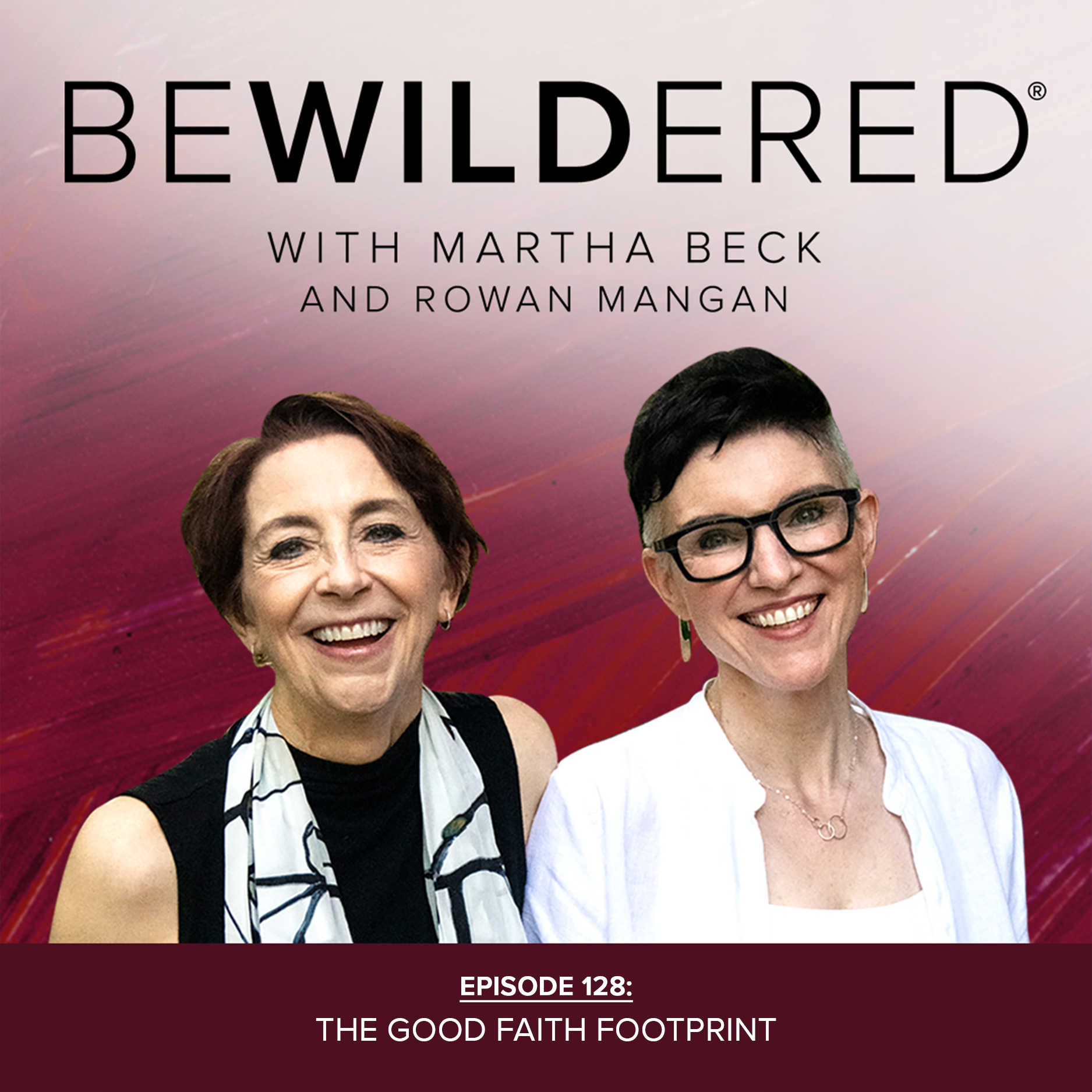
About this episode
On this episode of Bewildered, what starts as Ro's confession about late-night online shopping soon spirals into a story about our panicked late-night rescue mission for a box of creatures that weren't what we thought they were. In telling this story, we explore why panic and despair are the worst tools we have for saving the planet, and why good intentions are the most powerful footprint you can leave. Join us for the full conversation to find out more (and to learn how bees factor into the equation).



The Good Faith Footprint
Show Notes
So we’ve got a story for you on this episode of Bewildered, and we want to say right upfront: This story is literally true. It actually happened to us. Recently. In our pajamas. In the dead of winter in the Hudson Valley.
It involves a box of creatures that may or may not have been what we thought they were. And it starts, as so many misadventures do, with the internet after dark.
The Problem With Panicked Environmentalism
Ro has an ill-advised internet habit, and it is late-night online shopping. This time, she ordered something from the internet during “fake spring” in February, that time when spiteful weather gods fill us with false hope.
Believing the long winter to finally be over, Ro ordered a box of live bees. She pictures them buzzing happily around our property, correcting an environment overrun by invasive ladybeetles. Then she completely forgot about the bees until the delivery confirmation email arrived…during a hard freeze…at 9 o’clock at night.
What followed was a pajama-and-overcoat rescue mission to the mailbox, an eight-page email to a bee vendor, frantic Googling, a box that hummed with a strange silvery vibration, and ultimately a plot twist involving ladybugs and priority air mail to Georgia.
Why Panic Is the Worst Tool We Have for Saving the Planet
Beneath all that chaos is something we’ve both been sitting with for a long time. It’s something we’ve each carried since we were children watching Mutual of Omaha’s Wild Kingdom and learning about rainforests, oil slicks, and species extinction and not coping with any of it. At all.
We talk about the culture’s trap of panicked environmentalism: the belief that despair, outrage, and frantic striving are the correct responses to an ailing planet. But we’ve both tried that, and it doesn’t help. In fact, we think it may actually make things worse.
What we’ve come to believe, and what the science of chaos theory quietly supports, is that the energy of your intentions is the most powerful footprint you can leave. A small, well-aimed nudge from a place of genuine care and coherence does more good than any frantic Keystone Cops routine.
We talk about the difference between conservation and restoration (as our friends at Londolozi Game Reserve prefer to call it), why suffering is not the price of admission you must pay for helping the world, and why nothing generative or nourishing comes from the energy of panic.
Good Intentions vs. Frantic Striving: What Actually Helps the Environment
Remember, if your intentions are good, that’s not nothing. That’s something. Even if what you ordered turns out not to be bees. Even if they had to fly on a plane all the way to Georgia. Even if the carbon footprint of your eco-rescue mission is enormous.
We’re all just little monkeys running around with our hands and feet, making messes. But we also have the capacity to intend. And we think that matters more than we’ve been taught to believe. Good intentions really do make a difference.
The moment you set an intention, something shifts. When you come out of despair into a place of love, you start to leave an energetic footprint. And then you make a million tiny choices that have escalating effects on the world at large.
To learn how to go to a place of maximum calm, enjoyment, and enthusiasm, and then work to heal the world from that energy, join us for the full conversation. Let’s figure it out together.
Also in this episode:
- Why Martha was crawling under cars in the dead of winter
- The “Goldilocks” bearstick Ro made for Martha
- An enigma wrapped inside a perplex (with mayonnaise on the side)
- “Even Ladybugs Have Wings,” a short story for bees
- Demented chihuahuas and ducks in dominatrix outfits
- Ro sings the instant classic, “Robots Always Give Me Hope”
TALK TO US
You can follow us on our Instagram channel @bewilderedpodcast to connect with our Bewildered community, learn about upcoming episodes, and participate in callouts ahead of podcast taping.
And if you’re a Bewildered fan, would you consider giving us a little rate-and-review love on your favorite podcast player? Ratings and reviews are like gold in the podcasting universe—they help people find us, they help build this beautiful community, and most of all, they help us in our quest to Bewilder the world…
Episode Links and Quotes
- Dante’s Divine Comedy
- Martha Beck’s African STAR retreats at Londolozi
- Mutual of Omaha’s Wild Kingdom
- Keystone Cops
- Beyond Anxiety by Martha Beck
CONNECT WITH US
- Follow Martha on Instagram
- Follow Ro on Instagram
- Follow Bewildered on Instagram
- Join us in the Wilder Community!
- Listen on your favorite podcast app
- The Bewildered Show Notes
- Is there something you’ve been feeling bewildered about? If so, let us hear from you!
Transcript
Please note: This is an unedited transcript, provided as a courtesy, and reflects the actual conversation as closely as possible. Please forgive any typographical or grammatical errors.
Martha Beck:
Hi, I’m Martha Beck.
Rowan Mangan:
And I’m Rowan Mangan, and this is another episode of Bewildered, the podcast for people trying to figure it out.
Martha Beck:
Yeah. And I think we’ve got kind of an interesting story to tell the folks today.
Rowan Mangan:
We have a story of bumbling high jinks that involves you and me, Marty, quite recently, in our pajamas and our overcoats in the middle of the night.
Martha Beck:
In the middle of winter.
Rowan Mangan:
Freezing cold night. Running around our property.
Martha Beck:
Trying to save the world.
Rowan Mangan:
Trying to save the world badly. Like poorly.
Martha Beck:
Really badly.
Rowan Mangan:
Yeah.
Martha Beck:
But that’s all right.
Rowan Mangan:
It’s okay because what we’re learning is that if your intention is good, that really does make a difference in the world. That’s not nothing. That’s something, no matter what is in the box that you ordered online after dark.
Martha Beck:
Shh. Don’t tell. Come and listen.
What are you trying to figure out, Ro?
Rowan Mangan:
Well, Marty, you’re back on Instagram, I notice.
Martha Beck:
I am. Oh, yes. You mean scrolling?
Rowan Mangan:
Yeah, you’re back to your scrolling ways. It happens from time to time.
Martha Beck:
The internet plus ADHD. It is something.
Rowan Mangan:
It is something. I mean, we’ve talked about it before, but you forget that it exists for months on end.
Martha Beck:
I have to. You see what happens when I start.
Rowan Mangan:
Yeah. There is not a video in the whole internet that does not fascinate you.
Martha Beck:
Everything fascinates me, and I have to show it to people. I can’t share it because that means my algorithm will go all wonky. So I have to actually take it to you and force you to look at it.
Rowan Mangan:
It’s my algorithm. I won’t open things that you send me a lot of the time because you send—
Martha Beck:
Oh, that’s good. That’s wise.
Rowan Mangan:
You send me such rubbish, honestly, with love.
Martha Beck:
It’s so good. I mean, beavers carrying things across things. It’s amazing.
Rowan Mangan:
But what I love is that there’s a persona that goes with the you who’s in a scrolling mode. And I’ll just come in in the morning and you’ll be just sitting there and you’ll be like, “Ro, I’m following this absolutely demented chihuahua.”
Martha Beck:
It’s true. It’s absolutely true. I just love that little dog.
Rowan Mangan:
But it’s lovely. I’m following this absolutely demented chihuahua and I’m like, “Are you, darling?”
Martha Beck:
Yeah. It’s very like Breakfast at Tiffany’s or whatever with the chihuahua stuff.
Rowan Mangan:
So I’m trying to figure out how I feel about this, how to make peace with it. I don’t know, just I’m wondering when it will pass and you’ll go back to…
Martha Beck:
I have a lot of work to do and it really, really… I can’t not. And then my ADHD takes me to people’s posts about ADHD, which are always very cunning and true and make me have to text everyone I know who has ADHD. Thereby dethroning, pulling every single person I know completely into the internet and off the track of their lives.
Rowan Mangan:
No because no one opens the things that you send. But what I love is when you know that something’s really bad, you don’t text it to us because you know you’ll get in trouble.
Martha Beck:
No, no.
Rowan Mangan:
And so you get a video that’s total rubbish.
Martha Beck:
It’s so good.
Rowan Mangan:
And you text it to yourself.
Martha Beck:
To myself. Yeah because someone has to be told. And the me who reads my text is not the me who’s like “La-la-la, look at this beaver. He’s crossing the road with a pine tree in his teeth.”
Rowan Mangan:
So you’re kind of like holding up your phone to future you going, “Look, look!”
Martha Beck:
Yes, I am.
Rowan Mangan:
And do you ever scroll through your texts yourself and revisit?
Martha Beck:
Yes. And then sometimes they’re so good I have to resend them to myself.
Rowan Mangan:
No, seriously?
Martha Beck:
Yeah, because they have to stay current in case—and here’s the thing, it’s in case. So I was raised Mormon. We saved things like the whole “Watch out, there’s going to be a food shortage. You need to have three years supply of food in your basement,” I was raised with that, man. And so I keep things at the ready. Storage and me, we are friends. So you never know when that very excellent Instagram of the man who dresses his duck in dominatrix outfits, you never know who’s going to show up in your life and you’re going to need instant access to that particular thing. So yeah, I resend them so they’re current.
Rowan Mangan:
I feel like this is something I’m trying to figure out and I now know less about it than I did when we began talking about it. I’m so much further from figuring it out.
Martha Beck:
And my work here is done.
Rowan Mangan:
You remain an enigma to me, my love.
Martha Beck:
Wrapped inside a perplex with a little mayonnaise on the side.
Rowan Mangan:
Whoa, what are you… No, yeah I do. I do. Everyone knows it’s fine. I love you. What are you trying to figure out?
Martha Beck:
It’s not unrelated.
Rowan Mangan:
Uh-oh. Is it about a duck that gets dressed in…
Martha Beck:
No, larger and more kill-y.
Rowan Mangan:
All right.
Martha Beck:
Because the thing about scrolling and TV and stuff is that you see all these majestic creatures of the wild and they don’t scare you. I was reading, I was thinking about Dante’s Divine Comedy the other day.
Rowan Mangan:
Obviously. So was I.
Martha Beck:
When Dante says— he’s like wandering around in the woods and he sees a terrifying lion and a terrifying leopard and a terrifying wolf. And when you and I go to Africa to Londolozi and we see lions and leopards, we’re not… He is practically, I think in the original Italian, he says like, “I saw the lion and I shat myself.” Something similar to that. People were afraid to see lions and we’re like, “Can you show us a lion? Can you get close enough for us to hear it breathing in its sleep?” Which they do. And we’re like, “Yay!” We’re such idiots. And the people who’ve actually grown up in Africa know that this situation could actually turn sour. So they’re not like quite as jubilantly careless about being right next to a lion. They’re more wise.
Rowan Mangan:
I guess so, but I will say to you that I have also seen them get their iPhones out and do a little video.
Martha Beck:
Well, they are obsessed with the lions too, but they’re obsessed in a wise way where I’m obsessed in a completely idiotic way. And see, it bears on our situation. Oh, bears. Because it’s spring in the Hudson Valley. And I’ll tell you what happens in spring in the Hudson Valley.
Rowan Mangan:
Tell me.
Martha Beck:
The bears wake up after a long sleep.
Rowan Mangan:
Hungry bears.
Martha Beck:
Hungry and groggy. And every night, as you well know, my bedroom is in a little separate structure. So I have to go through the darkness through the woods in the night, and now there could be spring bears out there. And in fact, our neighbor sent around like camera trap video of a very large and glossy bear in our neighborhood, just ambling. That’s what they do. They amble. They stroll. He’s so glossy and large. And all I want to do is admire him and maybe give him a hug. And that’s a problem when you’re walking in the dark at night with spring bears.
Rowan Mangan:
Yeah. It’s funny because I’m going through the same thing with Lila where like way back when we first moved in and a bear came to visit us in our yard like the first day.
Martha Beck:
He was so polite, wasn’t he?
Rowan Mangan:
So lovely. He was such a great guy. And Lila’s like, “Let’s go up.” And I’m like, “No, but we won’t be doing that. We won’t be going anywhere near it because dangerous.” And then I think I did too well on that. So now, when we’re like, “Oh, the bears are waking up.” Lila’s like, “Is it going to get in the house? How do we stop it getting in the house?” And I’m like–
Martha Beck:
I think that’s wise.
Rowan Mangan:
We have enough in our household of forces that will terrify and find things terrifying. And I just want to also infuse a little bit of lightheartedness, but it’s like I have to find the happy medium.
Martha Beck:
I know. This is what I’m trying to figure out.
Rowan Mangan:
And I love how you, when you leave at night, first we check our babies, that’s our saplings, our little seedlings and seeds and plants and things.
Martha Beck:
And the eight-foot-tall tomato plants that you accidentally planted at Christmastime.
Rowan Mangan:
Didn’t accidentally plant them. I accidentally planted them at the wrong time.
Martha Beck:
They don’t really have a brake pedal as it turns out. They just grow.
Rowan Mangan:
Those things are like–
Martha Beck:
It’s getting like Little Shop of Horrors in there. They talk to each other. They make plans.
Rowan Mangan:
So you and I do our little thing where we go and check on our babies and turn off their grow lights. And then you open the door and you go, “Hello, bear.” And you sound like a 1950s husband getting home from work, expecting a cocktail. You’re just like, “Hello, bear. How’s your day been?”
Martha Beck:
Because I want him to think I’m large.
Rowan Mangan:
And kind of disillusioned.
Martha Beck:
Obstreperous. Yeah. And I like don’t give a shit, I’m going to slap him.
Rowan Mangan:
Yeah. Yeah. I made you a bearstick, which you have not been using.
Martha Beck:
I have the bearstick. It is a twig, my love. That would not even… No. I mean, certain things would stop a bear, but that… No.
Rowan Mangan:
I could like tie a jumper to it. I mean, sorry.
Martha Beck:
What the hell’s a jumper?
Rowan Mangan:
A sweater.
Martha Beck:
A jumper means a little pinnafore to us. So what I got was a stick that’s wearing a little pinnafore going, “Oh, look, it’s Goldilocks. Why don’t you kill her first?”
Rowan Mangan:
I have an Australian friend now, and you can’t hurt me anymore. Yeah.
Martha Beck:
You grew up in Australia and you have one Australian friend.
Rowan Mangan:
Yep. I have an Australian friend.
Martha Beck:
That’s so sweet, honey.
Rowan Mangan:
Where we live.
Martha Beck:
Oh, where we live.
Rowan Mangan:
We get together and insult Americans loudly in cafes and then they look at us. So that’s my new thing.
Martha Beck:
That’s what they’ll do. Because we are brash at first glance. But if you try to humiliate us, we have no…we just have no fangs. We’re not like the British. They’re polite at first, but if you try to hurt them or embarrass them, they come back at you with stuff that they honed in boarding school. It’s really scary. But Americans, we got nothing.
Rowan Mangan:
Oh, come on.
Martha Beck:
We’re like, “I’m great. I’m here.” And you’re like, “You’re awful. You should leave.”
Rowan Mangan:
And you’re like, “I’m going to bring democracy to your country.”
Martha Beck:
Oh, yeah. But wherever we go to bring democracy, we find oil, don’t we?
Rowan Mangan:
So lucky. Amazing how that happens. Hey, I have an amazing idea.
Martha Beck:
Okay, what?
Rowan Mangan:
Should we do a podcast?
Martha Beck:
What?
Rowan Mangan:
What?
Martha Beck:
It’s spring. Why would we do something like that? Yes, let’s do that.
Rowan Mangan:
Let’s do it.
Hi there. I’m Ro and I’ll be your podcaster for today. Do you know how to tip your podcaster? It’s actually pretty easy. You can rate our pod with lots of stars, all your stars. You can review it with your best superlatives. You can even subscribe or follow Bewildered so you’ll never miss an episode. Then of course, if you’re ready to go all in, our paid online community is called Wilder: A Sanctuary for the Bewildered. And I can honestly say it’s one of the few true sanctuaries online. You can go to wildercommunity.com to check it out. Rate. Review. Subscribe. Join, and you all have a great day now.
Marty, today we have a story about bees.
Martha Beck:
A story. It’s quite a long story. Quite a long, painful story.
Rowan Mangan:
It’s a true story. I want to say that. It’s a true story.
Martha Beck:
It is.
Rowan Mangan:
It happened to us recently. It’s a story about bees. And I guess the first thing I want to say to set it up is I shouldn’t be allowed to do things after a certain time in the evening. We watch a TV show as regular listeners will be aware.
Martha Beck:
They all know exactly what we do every day.
Rowan Mangan:
And after TV show, we all go into our little spaces and have our little evening rituals, whatever they may be. You’re on Instagram texting yourself, I was going to say beavers.
Martha Beck:
It’s a fine idea, now that you mention it.
Rowan Mangan:
And what needs to happen is that all my internet is cut off because I sometimes do ill-advised online shopping.
Martha Beck:
You do. I’m not going to contradict you here.
Rowan Mangan:
No. And it’s not right. And I had a really bad moment where I thought it was–
Martha Beck:
Wait, wait, wait, wait. I got to tell this from my perspective because I feel that your perspective will distress our listeners unduly. I think they should hear it from my perspective because that will terrify and yet I think amaze them.
Rowan Mangan:
All right.
Martha Beck:
Okay. So it’s Roey’s first winter in a wintery place, like really serious mofo of a winter. This was one of the worst–
Rowan Mangan:
Don’t know if we’ve mentioned it.
Martha Beck:
Yeah. Maybe I’ll just here or there. Now, it’s the worst winter I’ve survived since I lived in Boston and didn’t have a car. That was also hard-time winters, but this was a really rough winter. But then as you know, if you live in a rough winter kind of place, the weather gods lie to you.
Rowan Mangan:
The weather guards?
Martha Beck:
The weather gods. They like to dick around with you. So then they throw in… In February, they throw in the occasional 70-degrees Fahrenheit day.
Rowan Mangan:
Fake Spring.
Martha Beck:
And we had a fake spring and Ro got very active like a bear.
Rowan Mangan:
I was so happy.
Martha Beck:
Yeah, she was like putting away her winter clothes and moving the furniture out onto the lawn. We’ve got to have family time on the lawn. It’s been so long since we were outside.
Rowan Mangan:
Lawn is a generous word, I should just say.
Martha Beck:
Out on the…
Rowan Mangan:
Out in the mud patch.
Martha Beck:
On the Deliverance patch. It’s not really pretty yet.
Rowan Mangan:
No. But we do know where Bilbo’s been going to the bathroom all winter.
Martha Beck:
We do know that. That was under the snow like treats for Easter time. But it was like with every breath, with every action you took that day, you were saying in one way or another, “It’s over!”
Rowan Mangan:
I was tempting the gods.
Martha Beck:
You didn’t know, though. Karen and I sort of looked at each other and went, “Why is this… I guess we should go outside. Why are we not? ” And it’s because we’ve lived in winter places, and we knew about the lying from the gods.
Rowan Mangan:
That’s a tough one for me.
Martha Beck:
The god of weather. So then a few weeks go by, and it’s once again no degrees outside.
Rowan Mangan:
Horrifying, frigid.
Martha Beck:
Like any bear that woke up is now frozen solid wherever it happened to ramble.
Rowan Mangan:
We just had the memory of that one beautiful day. But a kind of hazy memory, honestly.
Martha Beck:
It got hazy in a hurry.
Rowan Mangan:
Yeah, because it seemed like it was too good to be true, I couldn’t really remember all that much that had happened that day, and that’s the problem.
Martha Beck:
That was because you got very manic and did things far into the night, I believe.
Rowan Mangan:
It turns out.
Martha Beck:
Yeah. So we do our whole day routine. We’ve got a beautiful fire in the wood stove, which is sending out massive amounts of… Because you are a wonderful firemaker, I have to say.
Rowan Mangan:
Thank you. She throws in a compliment because it’s about to get real real fast.
Martha Beck:
Wonderful winter skill. And then Karen goes to bed and the fire is dying and it’s dark and we’ve got our amber-colored glasses on because neither one of us sleeps without them. And you looked at me and you went absolutely ashen and you said…
Rowan Mangan:
This was the day after or maybe two days after.
Martha Beck:
It was a while after because you said, “Marty, I think I’ve done something really bad, like really bad.” And you weren’t just like in an inner child thing. You were afraid at an inner-child level, but also at an adult-Roey level. And I was like, “What?”
Rowan Mangan:
Do you ever have those times where you’re living your life and you think, “Oh yeah, last night I was looking at all my gardening Facebook groups and that was fun. And I was scrolling through and seeing what people were up to with all their planting because springtime’s here.” And then suddenly, my stomach just dropped and I just had this little inkling, and I was like, “Is it possible that last night after Trinity time when the internet should not be given to me, I actually kind of ordered a box of live bees? Oh no, I think I did.”
Martha Beck:
And she was like, “Marty, I think I ordered a box of live bees.” I was not expecting that. There were many things that I could have expected. That was not one of them.
Rowan Mangan:
If I go to Google and hit the letter A, the first thing that comes up from cookie memory is “accidentally ordered live bees” because it’s hard to know what to do when you accidentally order live bees.
Martha Beck:
Yeah. And I was already to be… I thought you were going to do something, like usually when you do something that you’ll say, like, “I told someone, I gave someone our email address and now I’m having second thoughts or something.” I wasn’t expecting anything.
Rowan Mangan:
I cut my hair off with kitchen scissors.
Martha Beck:
When you went down and grabbed the kitchen shears and cut off all your hair, you also said you’d done a bad thing. But these were, yeah, they’re fine. And then you said that. And I was like, “Oh, Roey, actually you know what? You have.” And then you checked your email and it said, “Delivered.” It was 12 degrees Fahrenheit outside. It was like deep-freeze weather. And our mailbox is like half a mile away from our house and we’re both just…we’re sliding into hibernation and now I’m like, “Oh God, Roey. Yeah, wow, yikes. We have to go find them.”
Rowan Mangan:
So it was cold.
Martha Beck:
We were in our pajamas and we had to put on galashes and overcoats.
Rowan Mangan:
Well, I just need to frame up the situation, which is that the bees won’t be okay.
Martha Beck:
No.
Rowan Mangan:
They will not be okay. And that’s the horror, like the dawning horror is I ordered the bees. It’s like being a fair-weather friend, a fair-weather orderer of live bees in a box coming to your house. And I had thought we will release them because someone on Facebook did it and gave me the idea. And they’re like–
Martha Beck:
In Mexico.
Rowan Mangan:
Probably. “We just released bees and it helps the pollination.” Oh, it was such a happy Sound of Music, la, la, la, The Hills Are Alive kind of moment that I was having. I thought, I didn’t know you could order bees.
Martha Beck:
No, I did not either.
Rowan Mangan:
I did not know that. So at some point before Googling “accidentally ordered live bees,” I Googled “how to order live bees,” unfortunately.
Martha Beck:
Then here’s the thing, you thought two things. You thought number one, when there’s a 70 degree day: “It’s over!” Number two, you thought, and you articulated this, “I just assumed that the people who mail bees around the country would never mail them to a place that was 12 degrees.”
Rowan Mangan:
Don’t they love their bees?
Martha Beck:
Yeah, but I think you’re putting too much of the burden on them, to be honest.
Rowan Mangan:
The bees won’t survive.
Martha Beck:
Maybe you would set them loose in a greenhouse. They don’t know.
Rowan Mangan:
They literally have my address.
Martha Beck:
They have kids too. They have to feed their families by mailing bees. That’s how it works, I guess. I don’t know about this industry.
Rowan Mangan:
So in my mind, there was like, maybe if we can just rescue them from the cold night and keep them alive in the box, but maybe I could put them in a little room or something until the weather got nice.
Martha Beck:
We were looking it up and it was so sweet. It’s like, “Release them into the flowers.” No, that’s not going to work. “Release them into…” I thought we could release them into my house. It’s separate. No, I don’t really want that either. And then it was, the other alternative was: “Let them out, keep them confined in something, but immediately give them sugar water because they’re starving.” And I was like, “Oh no, we have to get them out of the box and feed them.” But on the other hand–
Rowan Mangan:
They’re in a box and that’s–
Martha Beck:
Maybe they put some food in there with them. We don’t know about these things. This is a dark underbelly of American society, the bee mailing.
Rowan Mangan:
I probably ordered them on the dark web now that I think about it.
Martha Beck:
Probably. Somebody’s going to take that out of context, quote you, and try to cancel you with it.
Rowan Mangan:
Nah. It’s too much work.
Martha Beck:
Walk a mile in my shoes. Here’s the thing though, we determined that we had to go get them. We morally had to.
Rowan Mangan:
Yeah. And this was like the middle of the night, by which I mean about 9:15.
Martha Beck:
Oh my God. Can you imagine if you’d remembered before Karen went to bed, she would have been hysterical. She would have crashed the car.
Rowan Mangan:
Yeah.
Martha Beck:
She would have left. She could not have coped.
Rowan Mangan:
No. It was just us. It was just Marty and me, never the most sensible combination.
Martha Beck:
In our pajamas and our overcoats, driving to get the bees. Potential bee corpses.
Rowan Mangan:
I know. Oh my God, it’s terrible. It was terrible. The guilt. I can’t overemphasize this, in dead seriousness.
Martha Beck:
It was not funny for her. It was kind of funny for me.
Rowan Mangan:
But weren’t you worried about the dead bees?
Martha Beck:
I was worried about the bees, I did have a moment of despair, but then I thought, “Look, if they’re all dead, we’ll order two boxes come spring, and we will make sure that they survive. We will do whatever it takes to replenish the bee population that we have, you know.”
Rowan Mangan:
Because the blood wasn’t on your hands, so it was easy for you to say, “We’ll get two boxes of bees.” Just have another child.
Martha Beck:
Well, yeah, but somebody’s got to play that role. Somebody’s got to do it. Anyway, we got the box. There it was. Just a little ordinary-looking box. Tiny.
Rowan Mangan:
Smaller than… Well, it wasn’t tiny. It was like something size of a paperback book.
Martha Beck:
You mail chopsticks in it or something.
Rowan Mangan:
What? That is such a random… It’s not. It’s the thing you would mail a paperback book in. That’s the size that it was.
Martha Beck:
No, you wouldn’t put a paperback book in a box. Just wrap it.
Rowan Mangan:
Marty, it’s live bees. You’ve got to put them in a box. They’ll get squished.
Martha Beck:
Not a book in a box. Anyway, damn it, we went down there and we braved the cold and it was fearful. And we got those bees and we brought them in. And then we put them–
Rowan Mangan:
We put them with our babies.
Martha Beck:
We put them with the tomatoes, which probably would have eaten them by morning if we hadn’t been so terrified that we…
Rowan Mangan:
We left them in the box.
Martha Beck:
We put them in. We didn’t know what to do. Let them out and they get out in the house and then we have to swat them or die?
Rowan Mangan:
I sent a frenzied email to the people who’d sold me the bees.
Martha Beck:
And then by this time it’s like one in the morning.
Rowan Mangan:
And it was literally, I got their email, “Congratulations, your order has been delivered.” And I’m like, “Help! Live bees? Why did you let me do that? It’s freezing. It’s winter. What are you doing? How are you making a living doing this? This is not ethical. I’ve got bees. What am I going to do? Where do I put them? What can I do?”
Martha Beck:
It was an eight-page email.
Rowan Mangan:
And she wrote back, but I didn’t get the reply until the morning.
Martha Beck:
Well, you wouldn’t really.
Rowan Mangan:
No, I went to bed. I shouldn’t have even—
Martha Beck:
You should have written to the bears. They’re up all night.
Rowan Mangan:
Oh, so I sent the email. I was so, so distraught, but I just somehow went to sleep and you went off to your “Hello, bears. Hello.” And off you went over to your place. I went to my place. We all got under our mini covers because it was freezing. And then that was that. But then by morning, two things that happened.
Martha Beck:
Yes.
Rowan Mangan:
One was that I’d got an email from the woman who sold me the bees, surprisingly lacking in guilt and shame and just…
Martha Beck:
Must be a psychopath.
Rowan Mangan:
Right?
Martha Beck:
Yeah. How could you?
Rowan Mangan:
Awful. I mean, just cold. A cold woman. She was like, this is what she said: “Well, you could put them in the fridge for a couple of weeks.” She said, “Some will die.” And I was just like, “Put them in the fridge?” And then I was like, “So I’m not…” I wanted to put them in the bath.
Martha Beck:
It’s really good that you didn’t, Ro.
Rowan Mangan:
No, I know. But you, the second thing that had happened by morning is you had had an idea.
Martha Beck:
I had an idea because we have two dear friends of the Sapphic persuasion, that is lesbo friends, who live in a southern state and I knew, I mean, this is a person who sent me for my birthday, two persimmon saplings that are even tinier than the bear stick you gave me.
Rowan Mangan:
Fuck you. I worked on that bear stick.
Martha Beck:
Well, maybe a bear will come and eat that first and then move on to me. It’s like a chopstick. Only you could never chop anything with it. No.
Rowan Mangan:
Good Lord.
Martha Beck:
Okay. She sent me a persimmon, two persimmon saplings, started after she ate the persimmon, and then she started them off as seeds. So I’ve got these two tiny little trees that I desperately planted when they came in the mail wrapped in wet paper towels to keep them alive.
Rowan Mangan:
So you were in the mode of this as someone for whom the mail can provide unusual services.
Martha Beck:
Unusual young, live creatures that have to be then kept alive. Oh my God. Trying to plant those trees before, because I was supposed to get leaf litter and then put soil on it. And it was so snowy outside. The only places I could find leaf litter were under parked cars that the neighbors had left there for a while.
Rowan Mangan:
Can you imagine catching Martha Beck under your car, in your carport in the dead of winter, frantically scrambling around, collecting leaves, dead leaves from the fall?
Martha Beck:
It took a long time. It took a lot of cars. It was cold, it was difficult, and it was embarrassing, but I did it. I think they’re going to make it. Anyway.
Rowan Mangan:
We probably should have told people why we’re telling them this story. It just occurs to me.
Martha Beck:
Oh, right. I got so carried away. No, we’ll get there. We’re about to get there.
Rowan Mangan:
Just bear with us.
Martha Beck:
Bear with us. It’s like the old Greek classic poems. There’s a lot of, they did this and this and this and they stabbed everyone and then there’s a point, but it only comes after 9,000 anecdotes. Okay, so we’re almost there. By morning, I decided we’re going to send those things straight down to our friends in the South. So I write to them frantically, “Oh my God, Ro has ordered live bees. We need to get them to you. They may already be frozen to death.” And then we drove to the post office.
Rowan Mangan:
No, no, no, no, no, no, no. And you said, “We might need to get a hive and all these things.” And I’m like, “No, Marty. No. Don’t tell them we’re going to get them a hive and we’re going to do all these things. It’s too much. It’s like we just have to get them to a flower.”
Martha Beck:
And then Karen reads about that and she’s like, “Oh my God, you’re going to need all kinds of permissions. We need this certified at the state board. We need to get the USDA has to be involved. You cannot put those things in the mail. We will all go to prison because they have to be certified.”
Rowan Mangan:
Yeah. And you and I were like, we had been down to the post box in the middle of the night. We were so far past that. The law meant nothing to us at this point. We were on a mission from God to save these live bees in a box.
Martha Beck:
That’s right. And we sent them down and I started frantically texting my friend who was not at home, was staying somewhere else. She was like, “I will drive home to try to get the bees.” So they drove home, these two Sapphic ladies.
Rowan Mangan:
Well, hang on. It didn’t all happen instantaneously. We went to the post office. We mailed the bees. I want to say there was a really beautiful moment when I was carrying the box.
Martha Beck:
Oh, that’s true.
Rowan Mangan:
And we were walking, this was the next day and we were walking and I could feel the bees.
Martha Beck:
Yeah. Yeah. And you said, “Feel this.” And you handed me the box. And coming from the box was this sort of silvery vibration. I thought, “They’re flying around in there. This is amazing.” So anyway, we send them off to our friends who were ecstatic. They sent a whole bunch of gifs of bees, bees. “We’ve always wanted bees.”
Rowan Mangan:</strong
They were like, “You have asked the right people. We are here for this task.”
Martha Beck:
They showed up and then they rushed home. They upended their lives. They got the bees. I had to do something online and I was like, “Ro says they’ll die if you don’t set them free to field flowers right now.” And then one of them wrote back and said, to both of us, and you read the part of the text that said–
Rowan Mangan:
No, she wrote to me and she said, “All is well, not a single bug died that I could see.” And I was like, “Oh, that’s right. Glad the bees are okay.” And then she just didn’t reply.
Martha Beck:
Oh, she wrote back to me and it said, “Not a single individual died of the ladybugs in this box.” And I have to say, she too felt a strange and silvery glow coming from it before she opened it and found a bunch of baby ladybugs, girl bugs.
Rowan Mangan:
I didn’t order bees. And that’s when I had the thought, “Did I maybe order ladybugs, live ladybugs? Because that would make more sense because it’s actually too cold for bees up here. Maybe it was…” And then I looked up the order.
Martha Beck:
Oh, who would have thought?
Rowan Mangan:
It never crossed— And yeah, they’d been ladybugs all along. It wasn’t bees.
Martha Beck:
Yeah. It was very, very nice and something of a letdown to our friends, I dare to say.
Rowan Mangan:
Ladybugs are wonderful.
Martha Beck:
But why don’t you like having them hibernate in your bedroom?
Rowan Mangan:
Those aren’t ladybugs. Those are Asian ladybeetles. And they are invasive and they bite and they leave a smell and they leave a stain. And that’s what I was trying to undo. I was trying to correct the ecology of our whole environment because we’ve been overrun by Asian ladybeetles.
Martha Beck:
And here we get to our point, like an hour in.
Rowan Mangan:
I don’t know if we’re really going to get to that.
Martha Beck:
No, we do have a point. We have a point.
Rowan Mangan:
Well…ish.
Martha Beck:
The point is that both you and I, pretty much from infancy, when they first told us the rainforests were being chopped down faster than you can even imagine…
Rowan Mangan:
We didn’t cope.
Martha Beck:
Yeah, and oil slicks and species extinction and climate change, neither one of us could cope. We were children who ended up in the corner rocking and keening over these things. And I’m not even joking now. It was like serious meltdown territory. And it went on and on because what are you going to do? I would go to my grandmother’s house because we didn’t have a TV and I’d watch Mutual of Omaha’s Wild Kingdom where Marlon Perkins, a white-haired man, would send his assistant Jim out to wrestle anacondas and whatnot. And then at the end, they would always say, “The anaconda’s territory has been severely…” you know. And every single time they’d get to that… And I’m super old now, and it’s been going on forever. Anyway, you and I both were like, “We have to do something about this.” And I think we bought into a very prominent facet of the culture that we both were raised in, which is…
Rowan Mangan:
“If something is wrong, go shopping online.”
Martha Beck:
Well, there is that. But it’s this idea that we’ve got to do something about these vast problems, colony collapse among bees, right? And if the pollinators die, a third of our food is unavailable and we all die. It’s horrific. And you see all these terrifying things, and you feel bad for the bees and you feel bad for the trees and you feel bad for the ocean, you feel bad, you feel bad all the time. And there’s kind of a belief. And this is where I switched in the middle of my life. I was absolutely overwhelmed by despair and anxiety and rage that it was all happening. And I thought that was how to make it better. And I thought, you know we do all kinds of…we don’t use paper towels. We use reusable cloth things.
Rowan Mangan:
Imagine.
Martha Beck:
Yeah. I mean, and you insisted, no paper towels. “Kitchen roll” in Australian because it harms the environment. And every time I wipe things up with this cloth and I don’t use a paper towel, I think, “All right, well, I guess this is helping.” But even if we got those bees and we set up a beehive and we kept them alive until the bears came or whatever, everything feels like you’re trying to bail out the ocean with a teaspoon, right? And we both have dragged around this ball and chain of panic and woe and desperation thinking, because I think this is the cultural agreement, that that’s how we’re going to make things better by going to a place of desperate striving against immeasurable odds and thinking, “I have to do everything I can.” The whole Keystone Cops routine is what follows because you never do anything right, and—I mean one never does anything right. You do things right.
Rowan Mangan:
It’s the second fuck-you in the podcast in all the time. Wow. “The whole Keystone Cops routine ensues because you never do anything right.” Wow. I mean, I ordered one box of bees. Jesus Christ.
Martha Beck:
No, I mean, we know some people who have poured every ounce of energy and done a lot of things really right, like repairing the wildland at Londolozi and around, they’re really, really devoting their whole lives to rebuilding the wilderness, and it can be done. And I can see, “Oh, people who really devote their lives to it, they can get it done.” But I’ve also talked to them about their exhaustion, even at the level of impact they’ve been able to have, which is immense. Still, they’re cutting down more rainforest every minute.
Rowan Mangan:
Not them.
Martha Beck:
Not them, no. Jesus Christ, I am losing the plot here. Look, I’m speaking…
Rowan Mangan:
They try so hard. They just keep cutting. Oh, dear.
Martha Beck:
Pronouns are a problem. I think we’ve established that in our society today. Pronouns… It’s not you, you do everything wrong. They cut down the rainforest. It’s that one does everything wrong and somebody’s cutting down the rainforest. I don’t know. But I really, I stipulated for me that this is a horrifying situation and I really want us to try to change it. But the way of trying to change it is where I think people slide into a cultural trap that really shuts down your ability to be part of the solution. And that is the trap where you’re panicked. It’s where we were when we thought we’d killed this box of bees. So my whole life, I’ve been trying to work from this place of sort of panic and outrage and trying too hard and not knowing what to do and doing things that didn’t work or had unintended effects. And it’s painful. It’s not fun.
Rowan Mangan:
The thing for me is that I’m really good at solving problems in the moment. Like for instance, I recently ordered a box of live bees. The problem was that weirdly, well, there are a couple of problems looking back. It was winter. It was the middle of winter in the Hudson Valley, not a good time to bring bees into your world. Two, they weren’t bees. That was another issue. Three, in my attempts to save the world by shopping online…
Martha Beck:
For bees.
Rowan Mangan:
…for a box of live bees, I ended up shipping bees all over the country. And we were sending those bees priority.
Martha Beck:
In airplanes.
Rowan Mangan:
They went in airplanes. And even ladybugs have wings. You know what I’m saying? That’s redundant. And so then that’s a carbon footprint that is big. I gave those bees a carbon—and they’re bees. And here’s the thing, they’re not even bees, right? And their carbon footprint is massive because of me having to send them to Georgia. I don’t know where they came from, but I bet it was warm. And then they came up to New York and then they went down to Georgia and they’re very happy now.
Martha Beck:
Yeah.
Rowan Mangan:
They’ve gotten used to the fact that they’re ladybugs.
Martha Beck:
Yes, that’s right. I think “Even Ladybugs Have Wings” would be a good title for like a short story for bees to read.
Rowan Mangan:
I feel really moved by that.
Martha Beck:
Anyway, and the ladybugs would think maybe we were talking about men bees. Men bugs have wings, but even ladies.
Rowan Mangan:
No, that’s a stretch.
Martha Beck:
Okay. Let’s get back to this. This is the thing. There’s a kind of like, let’s be outraged, let’s get stressed, let’s serve this mission. And there’s almost like…but the evil is always like climbing up on you. The destruction of the ecosystem is so consistent and everything. And I believe that we’re going to make bigger messes whenever we come from that energy. So what I think is more important, this is what switched into my life. I think the energy of your intention is actually the most powerful footprint you can leave. And I don’t think I’m just like skating out of the problem here. I’ll tell you why not, but what are you going to say?
Rowan Mangan:
There’s like a cosmic field and intention feeds into that, is what I believe. And wanting to do a good thing does not get lost in some sort of Machiavellian arithmetic that cuts off if you didn’t actually save the world, if they weren’t actually bees. All this quibbling at the tiny details, like, what is that creature? But I really wanted to help. And that’s something.
Martha Beck:
It is something. And I mean, it was about the middle of my life that I started doing research on shamanism and like traditional ways and lore. And I really became even more woo-woo. I was already woo-woo. And what I started to see was that the moment you set intention, something shifts and I’d go to like a sweat lodge or something. And whatever you intended going in there seemed to be served in a way that was quite emphatically rammed home by the fact that you were in this unusual ceremonial space. And I started to actually believe that human intention… You know, we are such goofballs, little monkeys running around doing things with our hands and feet and just messing stuff up right, left, and center. But we also have this capacity to intend. And I do think that that feeds into a natural system, not just a ceremonial state. And I actually have a science to talk about connected to it. Ro’s sound asleep.
Rowan Mangan:
So we want to save ecosystems.
Martha Beck:
The world, yeah. The natural world.
Rowan Mangan:
But you don’t do that by getting outraged about them. I’m just trying to follow the path here.
Martha Beck:
Yes, and it’s very good to like sum it up here.
Rowan Mangan:
So I’ve already forgotten.
Martha Beck:
Okay. So we’re in this time of ecological destruction and devastation, and there’s also like crimes against humanity and I mean, there’s just horrible stuff going on everywhere on a global scale and we have brains that can just barely peek at the global scale and freak out, right? And we’re so tiny individually, or even two of us in the middle of the night in our galoshes. We’re tiny and most everything we do, we do badly or it ends up having unintended bad consequences. So there’s this place of existential despair. I still think that if you can clean up what’s going on in your own energy, if you can come out of the despair into a place of love, it doesn’t even have to be a place of hope. If you come out of despair and into a place of love, you start to leave a footprint—carbon, energetic, whatever—you make a million tiny choices that have escalating effects on the world at large.
Rowan Mangan:
It’s like we’re little projector screens and what our hearts actually wish does get projected out into the sky a little bit.
Martha Beck:
I think it does.
Rowan Mangan:
And other people can see it and it has some effect towards what we intend, even if it doesn’t look like that in the strictly material world around us.
Martha Beck:
And here’s the thing that I read that gave me a lot of hope, and it came from some people who were studying robotics. They had this little robot that they’d made and–
Rowan Mangan:
Robots always give me hope.
Martha Beck:
That along with Even Lady Bugs Have Wings should be the title of a song. Robots Always Give Me Hope.
Rowan Mangan:
[Sings] Robots always give me hope.
Martha Beck:
An instant classic. No, they were working with this robot and they found that when it was in a situation that was too complex and there was all kinds of weird stuff going on as it tried to figure out a problem, the electronics in it would go into a state of chaos, and they found that trying to control the chaos with like massive surges of energy or interventions doesn’t work.
Rowan Mangan:
Don’t try to control chaos.
Martha Beck:
No, it’s a bad mistake. Jurassic Park will happen.
Rowan Mangan:
Life finds a way.
Martha Beck:
Yes, it does. So what they found was that a system in chaos is just one little nudge away from total collapse, which that’s what we’ve been told our whole lives. But a system in chaos is also one tiny nudge away from something completely different. So they found that if they gave a very slight nudge to the robot when it was in chaos–
Rowan Mangan:
Okay, like with their elbow?
Martha Beck:
I think they just sent it a little command.
Rowan Mangan:
Okay.
Martha Beck:
It was clearer for me when they talked about spacecraft and they would talk about it getting into a chaotic gravitational field or set of gravitational fields. And when it was well and truly messed with in its little spacecraft brain, they would give a tiny shove from one of the thrusters and it would just move it the tiniest bit. And what happens, and they showed this in the robotics thing, they showed it with spacecraft, and they showed it with like biological systems, like a heart that is going into an arrhythmia and getting chaotic nerve signals. If you just give it a little electronic punch at a certain point, what happens in all these things is that there’s an underlying coherent system that is like robust and healthy and optimal, and these tiny nudges from a highly ordered direction cause the underlying order of the system to reestablish itself.
So the system then heals itself and it does this thousands of times faster than if they tried to control it with a lot of force. It’s called the “gentle nudge theory of chaos control.” One final example, I think this will probably really land with a lot of people. If you have somebody whose nervous system is in total dysregulation, they’re having a panic attack, there’s a kid having a total meltdown tantrum, and one very peaceful being enters that kid’s field of experience like a dog that’s a very calm, gentle, quiet dog or a horse—or a parent if the parent is calm enough. But too often, we see the kid melting down and we kind of go into a meltdown ourselves. And I think that’s what we’ve all been doing globally with the whole ecosystems and everything. We see it dysregulating and it dysregulates us and then we just run around doing dysregulated things.
Rowan Mangan:
Politically, that’s also a good characterization of like the state of the left right now, in American society anyway.
Martha Beck:
It absolutely is. And so, and we think we’re going to help from that place, but it’s just Keystone Cops, right? But then if you can get ordered, if you can get coherent in yourself, if you can go to a place of maximum calm and enjoyment, enjoyment, enthusiasm, like these positive emotional states that really have no downside—
Rowan Mangan:
Which is linking up with the spirit of the intention that you’re talking about, right? It’s like the intention towards goodness, linking up with that in an emotional way or in a spiritual way almost.
Martha Beck:
For me, yeah, totally spiritual.
Rowan Mangan:
Connecting with that spirit of goodness and hope and love, that that’s then contributing, and that’s the nudge.
Martha Beck:
Yeah. And having experienced that myself of being completely utterly dysregulated and then having almost miraculously something brushed against me that was beautiful and loving and ordered. And it was like, everything sort of came back to making sense and there’s suddenly joy where there was only depression or whatever before. Having been through that a few times, I think we are microcosms of all kinds of macrocosms.
Rowan Mangan:
And vice versa.
Martha Beck:
Say more.
Rowan Mangan:
Well, I don’t know. There’s us and bigger than us, and then there’s us and smaller than us, and we’re just somewhere in the middle floating around with our bumbling effects and our really good intentions a lot of the time, a lot of us.
Martha Beck:
You know what else bumbles?
Rowan Mangan:
Tell me.
Martha Beck:
Bees..
Rowan Mangan:
Box of live bees?
Martha Beck:
Box of live bees. No. So we’ve kind of bumblebee’d around for a while, but then I was reading this research and I thought, you know what? If all of our folks out there in podcast listening world, if they all feel just a slight degree of more [sighs in relief], we’re back to the inherent order that brings joy and a sense of health and vitality and enthusiasm. If we just move in that direction, it leaves a footprint we can’t yet measure, but I believe it is very, very real and actually very powerful.
Rowan Mangan:
Me too, and not acknowledged, not acknowledged as though if the outcome of any situation isn’t measurable, it’s not in existence. And I feel like that does such a disservice to the beauty of people’s goodness in how it is expressed.
Martha Beck:
Because we could get hate mail here: “How dare you tell us to stop worrying and feel joyful and enthusiastic when you’ve been destroying bees” and “Don’t you know you’ve got to get out there and work for goodness” and…
Rowan Mangan:
I don’t think so.
Martha Beck:
I think that’s the wrong footprint. I don’t think anything that is generative and nourishing comes from that energy.
Rowan Mangan:
Yeah, I agree. I think that we acknowledge all of it, all of it, absolutely the outcomes, absolutely what we can create, but we certainly don’t… I don’t think it’s of our true nature to value reacting against something that’s unjust and make that more worthy than reacting in the spirit of creating something that is just and good. Even if it turns out that somehow it might be ladybugs and not bees or whatever, like whatever, metaphorically, let’s just say.
Martha Beck:
But you know, I just wrote this book where I talk about how I think the way to lower your anxiety is to enhance your creativity. Yeah, I did.
Rowan Mangan:
Rings a bell.
Martha Beck:
And I get angry mail saying, “How dare you say that I should drop my anxiety and do something creative. I am not doing service to those who suffer if I drop my anxiety about them and feel good in my life.” And I’m like, “If you broke your leg and I came upon you and I was the only person there to help you, do you really want me to break my own leg and lie there on the ground screaming with you so I really get how you’re feeling? Wouldn’t you rather I said, ‘Let me do something creative about this situation and make a phone call or run for help or something?'” There is really this identification of suffering as a form of helping the suffering, and I think it comes partly from Christianity, the guy on the cross is the one helping us all the most, but he did it with his love, not with his—well, now I’m in some very deep water. What are you going to say?
Rowan Mangan:
Do you want to be right or do you want to make it better? I don’t know, that’s where I kind of land in it all. And I want to try making it better even with the risk that… Or no, the certainty that I’m going to fuck it up repeatedly, especially if I take any action at all after Trinity time.
Martha Beck:
That’s true. That is so true.
Rowan Mangan:
Take the internet away from me.
Martha Beck:
Just send you out as bear bait at that point. But to do it with, to seek first the conservation of one’s own joy and then let that be the… And even the restoration as our African friends always say, “This is not conservation, it’s restoration.” But they’re also some of the funniest, most joyful people that you can find who come from a place of goodwill and not of despair. And I think that’s the way that one… I think that’s how we…
Martha Beck and Rowan Mangan:
…stay wild.
We’re also on Instagram. Our handle is @bewilderedpodcast. You can follow us to get updates, hear funny snippets and outtakes, and chat with other fans of the show.
For more of us, Martha’s on Instagram, themarthabeck. She’s on Facebook, The Martha Beck, and she’s on Twitter, marthabeck. Her website is, MarthaBeck.com. And me, I too am on Instagram. Rowan_Mangan. I’m on Facebook as Rowan Mangan. And I’m on Twitter as RowanMangan. Bewildered is produced by Scott Forster with support from the brilliant team at MBI.
Read more
Questions? Comments? Trying to figure something out? Email us! [email protected]
Credits
Wandering The Path by Punch Deck | https://soundcloud.com/punch-deck
Music promoted by https://www.free-stock-music.com
Creative Commons Attribution 3.0 Unported License



0 comments