

About this episode
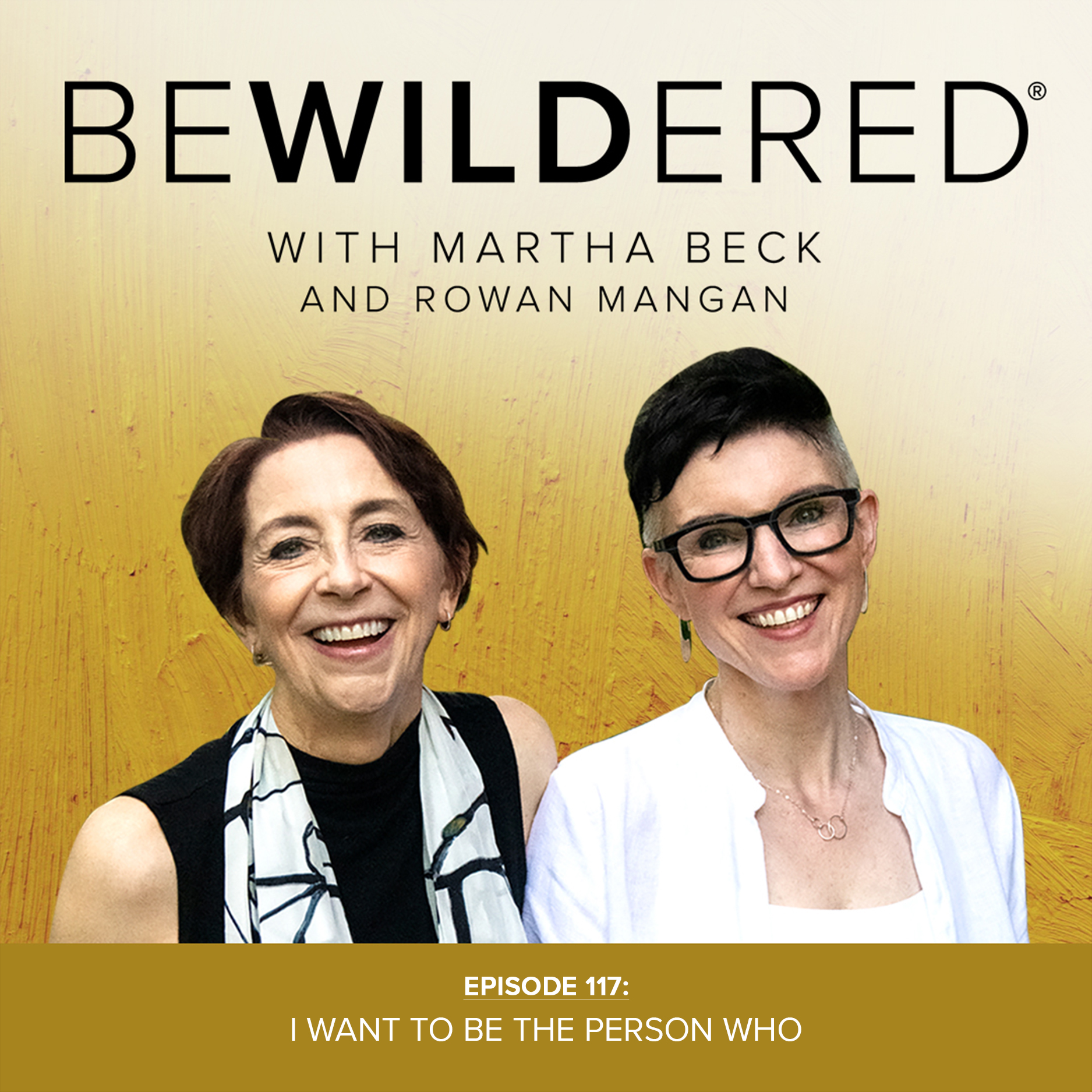
What if the person you say you want to be… isn’t really who you want to be at all? In this episode of Bewildered, we talk about what it means to follow culture instead of joy, and how it all boils down to what Martha has learned (in person and on Instagram) about zebras and horses... Tune in to discover whether you really want to be the person you think you want to be, and find out the meaning of the unforgettable phrase: “Stop saying you want to be a horse!” It’s a fun one (we promise)—join us!



I Want to be the Person Who
Show Notes
What if the person you say you want to be… isn’t really who you want to be at all?
In this episode of Bewildered, we’re talking about that feeling when you go, “I want to be the person who does that”—whatever “that” may be for you—and what happens when who we think we want to be doesn’t match our wild, true selves.
Let’s say, for example, you want to do things like check your texts every hour, or exercise daily, or write poetry first thing in the morning, or pack the perfect school lunch. Whatever it is, you need to ask yourself if that desire is coming from culture (“I should want to”) or from your true nature (“I actually want to”).
The difference between wanting to do a thing and just wanting to want to do that thing is a question of nature vs. culture (surprise, surprise). Which brings us to Martha’s latest animal metaphor: Are we zebras trying desperately to be horses, or horses secretly longing to be zebras?
Now, there are times when we must cooperate with culture to a certain extent—it’s inevitable because we want to connect with other beings. Even if we are truly, in our souls, stripey and bitey zebras, we still have to do horsey things from time to time.
So how do we parcel up the things that aren’t our nature and do them anyway, then go back to being ourselves the rest of the time? Tune in for the full episode to find out!
We’ll talk about the freedom that comes from making peace with your zebra self, and the creative systems you can set up to make sure the texts get answered, the carts get pulled from the mud, and your loved ones aren’t left in the lurch…without losing who you truly are. Join us!
Also in this episode:
- Bronchitis, jet lag, and Prancercising
- Martha’s emollients turn her skin into Death Valley
- Ro likes touching onions (and it’s completely innocent!)
- Two “smooth criminals” confess to petty theft
- Martha scrolls Instagram at the speed of 5 posts per hour
- The sweet satisfaction of peeling off your face
TALK TO US
You can follow us on our Instagram channel @bewilderedpodcast to connect with our Bewildered community, learn about upcoming episodes, and participate in callouts ahead of podcast taping.
And if you’re a Bewildered fan, would you consider giving us a little rate-and-review love on your favorite podcast player? Ratings and reviews are like gold in the podcasting universe—they help people find us, they help build this beautiful community, and most of all, they help us in our quest to Bewilder the world…
Episode Links and Quotes
- The Way of Integrity by Martha Beck
- The Myth of Sisyphus by Albert Camus
- Like Water for Chocolate by Laura Esquivel
- 3 Ways to Cut Onions Without Crying
CONNECT WITH US
- Follow Martha on Instagram
- Follow Ro on Instagram
- Follow Bewildered on Instagram
- Join us in the Wilder Community!
- Listen on your favorite podcast app
- The Bewildered Show Notes
- Is there something you’ve been feeling bewildered about? If so, let us hear from you!
Transcript
Please note: This is an unedited transcript, provided as a courtesy, and reflects the actual conversation as closely as possible. Please forgive any typographical or grammatical errors.
Rowan Mangan
So Marty?
Martha Beck:
Yes, Roey?
Rowan Mangan
We have a fun episode of Bewildered coming up.
Martha Beck:
Yes, we do.
Rowan Mangan
You know how you say, “I want to be the person who does that thing.”
Martha Beck:
Oh yes, I know.
Rowan Mangan
And it’s true. But is it?
Martha Beck:
Is it?
Rowan Mangan
Is it? Do I really want to be the mother who diligently stays up late defrosting mozzarella sticks for her daughter’s school lunch the next day as all good mothers should do?
Martha Beck:
All good mothers. That’s the least they can do.
Rowan Mangan
The least they can do.
Martha Beck:
I’m lying. Do I really want to be a person who checks texts every hour? Do I really want to be that person?
Rowan Mangan
Really want to.
Martha Beck:
Well, it all comes down to what I have learned—in person and on Instagram—about zebras.
Rowan Mangan
Oh yeah?
Martha Beck:
In relationship to horses.
Rowan Mangan
You will find in this episode of Bewildered, Marty uttering the—to me—unforgettable phrase, “You’ve got to stop saying, ‘I want to be a horse.’ Stop saying that.”
Martha Beck:
That’s just between us, Roey. You’ve got to stop saying that. Come give us a listen.
Hi, I’m Martha Beck.
Rowan Mangan
And I’m Rowan Mangan. And this is another episode of Bewildered, the podcast for people trying to figure it out.
Martha Beck:
Yes.
Rowan Mangan
So what are you trying to figure out, Martha Beck?
Martha Beck:
Well, first off: Uhhhhhhhh. That. I’m trying to figure out that.
Rowan Mangan
And in conclusion: Uhhhhhhh.
Martha Beck:
It was her last hope. I have a bit of a cold and a bit of jet lag, and I’m just forging ahead anyway and trying to figure it out.
Rowan Mangan
We must imagine Sisyphus podcasting through it.
Martha Beck:
That’s right. If our audience is as familiar with Albert Camus as you happen to be.
Rowan Mangan
Or internet memes on the same topic.
Martha Beck:
Well, let us imagine Sisyphus with a bit of bronchitis and some jet lag.
Rowan Mangan
Yeah.
Martha Beck:
And the rock.
Rowan Mangan
And a podcast.
Martha Beck:
And a podcast. The man was burdened, but he’s happy. Okay. Okay. Wait, wait. I have a thing that I was trying to figure out. I know I’ve mentioned this at least once before, but the struggle goes on, and that is my battle with emollients. Everywhere on the internet are ads for people like me who are trying to figure out how to make their skin look a tiny bit less old. And they always have pictures of women who look like they have been run over by a bus in the before thing, and then they put on some weird green powder or something and suddenly they look like Beyonce, right? And I know it’s a lie. I know it’s a lie, but I feel responsible to somehow feed my skin things that will make things better for my life. So I got something off the interweb. I put it on once a day because I’m going to run a workshop, and everybody will be pleased with me because of the slightly less old look of my skin.
Rowan Mangan
Right. That’s what everyone comes to a workshop really ready to assess how old the skin of the workshop— Yeah.
Martha Beck:
A hundred percent.
Rowan Mangan
Yeah.
Martha Beck:
Yeah. I mean watch the interweb. It will tell you that. So here’s the thing, I will stop saying “interweb” someday.
Rowan Mangan
Thank you. That would be so nice.
Martha Beck:
I’ll just go back to, uhhhhhhh.
Rowan Mangan
I think you need to put some of that emollient on your throat.
Martha Beck:
Oh God. I should have swallowed it. Anyway, this particular emollient, I don’t know, was very intense because my face started to hurt a lot. And it got quite blotchy.
Rowan Mangan
So you were far from home and you had a new thing that you’d bought off the internet.
Martha Beck:
Yeah. And it said once a day. It was really intense.
Rowan Mangan
Did it say anything else?
Martha Beck:
Nope. Just once a day. Seriously. It was just this thing in a really fancy little flask that said once a day.
Rowan Mangan
Was it sold to you by a mysterious gypsy on the side of the road? Did it grow a bean stalk?
Martha Beck:
I had also been using some lotion that came to our house, even though it was addressed to somebody who doesn’t live there anymore. I feel so guilty even saying this because I kept it.
Rowan Mangan
Regular listeners to the podcast will know that we bear a grudge against the person we bought a house from.
Martha Beck:
She painted over a mouse!
Rowan Mangan
She painted over a mouse. In fairness. And so Marty—
Martha Beck:
I tried to forward the lotion to her.
Rowan Mangan
Oh, you did not. I watched you.
Martha Beck:
I thought about it.
Rowan Mangan
I watched you notice the thing, obligatory like check the name, and then I saw you clock that it was lotion.
Martha Beck:
No, I opened it first. How do you think I knew that it was lotion?
Rowan Mangan
I knew that it was lotion.
Martha Beck:
So I thought, you know, it’s not going to be the end of her life if she doesn’t get her lotion right away.
Rowan Mangan
You are actually admitting to a crime, right?
Martha Beck:
God, I really am. And I wrote a book called The Way of Integrity. I take it all back. Oh my gosh, I have to call her.
Rowan Mangan
Wow. How the mighty have fallen.
Martha Beck:
I’ve got to buy more of that lotion and send it to her. Oh my God. Did I tell you about the time I once was in the supermarket and I needed some sunglasses, so I put some in my cart off some rack, and then I accidentally just put them on as I was leaving and didn’t pay for them? And they were really good sunglasses.
Rowan Mangan
Really good as in they worked well?
Martha Beck:
Oh, not high quality, but I liked them. I cannot buy high-quality things because I am me.
Rowan Mangan
Because of you.
Martha Beck:
But I really wanted to go back and pay for them. But then I was embarrassed to admit that I’d gone off without them. So I thought, here’s what I’ll do.
Rowan Mangan
Sneak them back on the shelf.
Martha Beck:
Yeah, just sneak them. But then I thought, anyway, there was a lot of consideration that went into this and I finally went back to pay for them. And the store had gone out of business.
Rowan Mangan
Because of you?
Martha Beck:
No, I have to say the sunglasses were $4.50. It was four dollars and fifty cents. I’m not making a huge crime here. But now with the lotion, it’s starting to add up.
Rowan Mangan
I went through a shoplifting phase, but I was way too old for it. I was like 22. I know.
Martha Beck:
You never told me that.
Rowan Mangan
I know. I just…
Martha Beck:
Oh my God, we are horrible.
Rowan Mangan
I know.
Martha Beck:
We’re like pirates.
Rowan Mangan
We’re criminals. Smooth criminals.
Martha Beck:
God. And now…
Rowan Mangan
To return to the lotion, you smooth criminal.
Martha Beck:
Anyway, I was using this daily lotion and it was very intense and I thought, I can’t do this anymore. This is hurting. And putting on more is just making it worse. It really hurt.
Rowan Mangan
It’s hurting me more than it’s hurting you.
Martha Beck:
So I thought, you know what? Back to basics. I’m just going to use, I’m going to wash my face. I’m going to put on the lotion that they always give you in the hotel, the hotel lotion for your body. Even though I once gave a friend, she said, “Do you have some lotion?” And I gave her body lotion. She was like, “This is body lotion. I need hand lotion.” I guess she had hands that weren’t part of her body. aAnyway, like other hands, a collection of hands that she wanted to lubricate.
Rowan Mangan
The hands are to the body as the face is to the head perhaps.
Martha Beck:
Okay. And you can’t use body lotion for the face. But I decided I was going to. I was just going to go back to basics.
Rowan Mangan
Imagine, if you will, the face as part of the body.
Martha Beck:
What?!
Rowan Mangan
I mean this is why we’re controversial.
Martha Beck:
That’s right. That’s right. And just have at us, folks. Yeah. I don’t know for what.
Rowan Mangan
Send your letters.
Martha Beck:
Anyway, the lotion in the hotel was oddly watery and clear. But I thought—
Rowan Mangan
Was it water?
Martha Beck:
A little thicker than water, but not blood, which I’ve heard is thicker than water. Anyway, I put it on my sore, hurty face and I woke up in the night and I hurt even more. So I put more on and it got worse and worse. And I looked in the mirror and I looked like—Have you ever been to Death Valley?
Rowan Mangan
I’ve not. No.
Martha Beck:
I looked like Death Valley. It’s like you get one rain every 10 years and then it is like wet clay and then it breaks in the sun and it looks like this scaly, nasty surface. That’s what I looked like. So I kept putting on more of the hotel lotion and it just got worse and worse. And finally I asked my friend who was there, is the lotion in your room weirdly clear?
Rowan Mangan
Does the lotion in your room make you turn into Death Valley?
Martha Beck:
And she said, no, the lotion in my room is white and scented of lavender. And I was like, “What have I been putting on my face?” And I truly believe it was soap.
Rowan Mangan
It was hand soap.
Martha Beck:
I think it was just hand soap. It wasn’t even face soap or body soap, body wash, body wash, hand soap. Different. For God’s sake, don’t use the same detergent on everything here.
Rowan Mangan
Marty thinks that all soap is as one. This is true. She’ll just be like, it’s the same thing: what you use on your toilet, what you use on your child, just put it in the washing machine and scrub it up.
Martha Beck:
That’s so not true. You’re so paranoid. This has gone on way too long. My point is, I don’t know what my point is. Emollients. They’re dangerous. Also, I recognize, I just want to say this one more time for the listeners, that my voice sounds like someone trying to clean a toilet with a live raven, and you just have to deal with it.
Rowan Mangan
Or a hand soap.
Martha Beck:
Yeah. You get a little hand soap and a raven and just swish it around in there and you get my voice. Anyway, I’m trying to figure out emollients. I have no conclusion here. It was horrible. I stopped using the soap on my face and my face gradually caked off after about, seriously, this is so gross. But I’m going to tell you anyway, three days after I got back, I was washing my face with regular soap and a whole layer of it just peeled off.
Rowan Mangan
Can I ask you something?
Martha Beck:
Yeah.
Rowan Mangan
For real, for real?
Martha Beck:
Yeah.
Rowan Mangan
Was it a bit satisfying to peel off your own face?
Martha Beck:
Totally. So totally.
Rowan Mangan
Yeah. It sounds like it would be amazing.
Martha Beck:
Yeah. I thought the face underneath this would look dewy and youthful.
Rowan Mangan
And?
Martha Beck:
No, but at least it was fun to peel off the old one. God. What are you trying to figure out? This is not right.
Rowan Mangan
So I am trying to figure out, well, how to design the perfect life that meets my every need. And living with a life coach as I do—I know, awkward. No one you know. Sometimes I am attempting to work out my life, trying to figure it out. And you pop in, bit life-coachy.
Martha Beck:
Hello!
Rowan Mangan
“Hello, look at my face. I’ve got another one underneath it.” So I was trying to figure out my life and I was free styling: I’ve got to figure out my life. And some of the time I garden and some of the time I cook and I bring the food from the garden and I bring it forth, and in there somewhere, I raise a child, run a business, make a podcast, be a person to people and things like that. And you said, “Write poems.” And I was like, “Yes, also, I will write the poetry.” And then you said, “Your back hurts because you’re not writing poetry. And you shouldn’t cook.” Because that’s how life coaches talk.
Martha Beck:
To their spouses.
Rowan Mangan
“You shouldn’t cook. You shouldn’t cook.” So then I was like, I think I must have been, I was quite caught up in the poetry of this new life in this new town and in this new place. And I’m going to be like, no, I’m going to have a different sort of day that has 27 hours and in those extra hours I will be doing the things. And you were like, “Anyone can make a food. Not everyone can make poems.”
Martha Beck:
Especially not several poems.
Rowan Mangan
Yeah, not several poems. And I was like, and I said to you, I’ll own it, “Yeah, but shouldn’t a poet like touch onions? I want to be the kind of poet that touches an onion.”
Martha Beck:
You actually said, “I think it would really fuel the poetry if I had touched an onion earlier in the day.” I was saying, because you’ve been doing this not just recently, honey, but for 10 solid years, “I’m going to have a life where I will be a crossing guard and also a farmer. And I will be a Canadian mountie while I’ll also be a veteran nurse.” You have wildly ambitious lifetimes that you plan. And they’re all supposed to happen simultaneously.
Rowan Mangan
No, consecutively in the one day.
Martha Beck:
In the one day. Yeah. So when your back goes out, it kind of carves into that.
Rowan Mangan
It does. It does. Thank you for understanding.
Martha Beck:
But what makes you happiest, and the thing that I think makes you unbelievably—well, many things do—but one of the most amazing things about you is your poetry.
Rowan Mangan
Thank you.
Martha Beck:
And you have not been putting it first. Sorry. Sorry, I get a little life-coachy spousey on you.
Rowan Mangan
Yeah, but I want to touch an onion and I want to write a poem about touching an onion. Do you even know how an onion feels?
Martha Beck:
How it feels subjectively?
Rowan Mangan
Yes.
Martha Beck:
“Don’t chop me!”
Rowan Mangan
“Why are you putting a little piece of me on your head?”
Martha Beck:
Okay, so that’s another thing.
Rowan Mangan
Because it stops your eyes crying.
Martha Beck:
I’ve never taken that up.
Rowan Mangan
It works.
Martha Beck:
She puts a chunk of onion on her head when she’s chopping onions.
Rowan Mangan
I do.
Martha Beck:
Placebo.
Rowan Mangan
Nope.
Martha Beck:
But then your hair smells like onions all day long.
Rowan Mangan
Yeah. Well that’s not a placebo. That’s just a delicious personal… Anyway, anyway, I’ve got to touch an onion. We’ve all got to touch an onion from time to time.
Martha Beck:
But the fact is you’ve touched a hell of a lot of onions without writing a lot of poetry in between.
Rowan Mangan
Hm. No, that’s a fair point.
Martha Beck:
Yeah.
Rowan Mangan
So touch fewer onions? Maybe I could touch an onion with one hand and write a poem.
Martha Beck:
She’s left-handed. So it would be like—
Rowan Mangan
If you read a book called Like Water for Chocolate, that’s where it tells you to put an onion on your head.
Martha Beck:
And then you’ll be Like Water for Chocolate. You put water for chocolate on your head too?
Rowan Mangan
Oh God. This is just going so long.
Martha Beck:
This is terrible. The point is, you are trying to do everything, and then at the point that you actually sit down to write your poetry, here’s the thing, you’re not even saying it. You’re dancing backwards from this thing so fast that you’re not even tracking the point.
Rowan Mangan
Dancing?
Martha Beck:
Yes, dancing back, metaphorically. Here’s the deal. You’re afraid to write poems because they matter to you. If you chop up an onion and it’s not chopped exactly right, and we eat it that night and only Lila goes, “That’s horrible!” and hurts your feelings, it really doesn’t matter. But your poetry really matters, so it’s scarier. There. That’s what you’re trying to figure out. They don’t call me life coach for nothin’.
Rowan Mangan
So I can’t touch any more onions?
Martha Beck:
You may touch an onion every fifth poem. By the way, this is not how I life coach. I would always say, “What do you feel?” And we had that conversation, right? What do you feel? What makes you happy? And she thought about writing poems and it was like, “Oh my God, that is my deepest calling at this point.” And I’m like, “Okay, do it.” And she’s like, “Nyah. Onion. Onion.” There were other things too. There was soil involved. Touch the soil.
Rowan Mangan
I want to get a t-shirt that just says, “Touch an onion.”
Martha Beck:
I’m sure that’s, I’m just trying to figure out which perverted sex act that would metaphorically represent.
Rowan Mangan
Nothing!
Martha Beck:
If you said “Touch an onion” on a shirt, it would be taken sexually.
Rowan Mangan
No, it would not. It’s the most innocent thing in the world. It could not be misconstrued.
Martha Beck:
What are we talking about?
Rowan Mangan
Touch an onion. How could it be misconstrued?
Martha Beck:
That was a little creepy right there.
Rowan Mangan
Just grope it. Firmly. Give it a little twist.
Martha Beck:
Grope an onion firmly, give it a little twist.
Rowan Mangan
Give it a little twist, put it on your head.
Martha Beck:
And we’re back because you have just written a really beautiful verse there.
Rowan Mangan
Thank you.
Martha Beck:
That’s beautiful.
Rowan Mangan
I think I will write an entire anthology of onion poems.
Martha Beck:
And people will read it with a little piece of paper on their heads. So actually I’m going to come back and say tell me where I’m wrong about being afraid, you being afraid to write a poem and wanting to touch onions because actually you’re backing away from the serious thing.
Tell me where I’m wrong.
Rowan Mangan
I will tell you where you’re wrong.
Martha Beck:
Please.
Rowan Mangan
With the onion. No. I know when I’ve finished cutting an onion. That’s the thing. And if I’m trying to do a day, I can cut an onion and then it’s cut. That’s the tricky thing. That’s the tricky way is, I don’t know when a poem—I’ve been working on poems.
Martha Beck:
I know. But since that conversation. Before that, you hadn’t been for a while. I’m just saying.
Rowan Mangan
You’re taking all the credit.
Martha Beck:
Tell me where I’m wrong.
Rowan Mangan
Shall we do a podcast?
Martha Beck:
Yeah, it would be nice to get to some sort of a point.
Rowan Mangan
Hi there, I’m Ro and I’ll be your podcaster for today. Do you know how to tip your podcaster? It’s actually pretty easy. You can rate our pod with lots of stars, all your stars. You can review it with your best superlatives. You can even subscribe or follow Bewildered, so you’ll never miss an episode. Then of course, if you’re ready to go all in, our paid online community is called Wilder: a Sanctuary for the Bewildered. And I can honestly say it’s one of the few true sanctuaries online. You can go to wildercommunity.com to check it out. Rate, review, subscribe, join, and y’all have a great day now.
So what we want to talk about on this podcast today, Dr. Martha Beck, is that feeling when you go, “I want to be the person who does that.”
Martha Beck:
So as we were driving along today, you posed me an interesting series of questions.
Rowan Mangan
As I tend to do.
Martha Beck:
The first one was, “Have you checked your texts?” And I said, “Of course, yes.” Because I check them every week, and there’s always a nice crop that’s been waiting there for me.
Rowan Mangan
Saying things like, “Please, Martha, for the love of God.”
Martha Beck:
And, yes, and so I looked at a request on the texts and I was like, “No, I do not have a copy of a book I wrote 20 years ago and I don’t have a braille copyright close at hand.” And you were like, “Stop yelling at me.” Because in fact I was pretty much yelling at you.
Rowan Mangan
Not true.
Martha Beck:
Not at you, but anyway, then you repeated a plea that you’ve made before: “Marty, could you please, please just check your texts so I don’t have to get yelled at like this all the time?” And I said, “Well, how often do most people check their texts?” I thought once a day, which I’ve been doing. And to me, that is a very high level of showing up.
Rowan Mangan
Texting and responding to.
Martha Beck:
Oh, that might take a few more days. See, I’m feeling great shame now. But you said, I said to you, “How many times a day do you check your texts?” Do you remember what you said?
Rowan Mangan
I don’t know, like both of these responses are potentially shameful in different ways, right? Because I think I said, “Well, I would definitely know if I’d received any texts in the last hour.”
Martha Beck:
Which just floors me. I mean, what kind of witch are you?
Rowan Mangan
Maybe I’m too—
Martha Beck:
Oh, so you think that you check ’em too much?
Rowan Mangan
Well, I’m not—checking my texts isn’t a discrete act.
Martha Beck:
What?
Rowan Mangan
It’s not like I go, “Hello, I must check my texts.” Boop, boop. I just, the phone is there and it goes in my watch. It tells me things. It brings things to my attention.
Martha Beck:
I am dumbstruck with amazement. It’s not a discrete thing where you have to brace yourself to go check your texts?
Rowan Mangan
No.
Martha Beck:
Oh my God. I have to have a runway and time to plan and deal with it before I check texts.
Rowan Mangan
Sometimes I’m listening to a podcast and a voice comes in and it says, “Marty sent a long text. Read it?” And I say, “Okay, read it.” And then she reads it to me.
Martha Beck:
What does it say?
Rowan Mangan
It says, “Bring me a hair dryer.”
Martha Beck:
And that’s what your Siri considers a long text? “Bring me hair.” There I edited it. Does that help? Seriously, I feel so, like I can use technology—I’m not that kind of old, doddering, “I don’t know what the dinner is. It’s a series of tubes.” But I just never in my life have I been able to just casually notice what other people need throughout the day. I am so—what do they call it? Hyperfocused. There is absolutely no way. It’s like me telling you, “Remember everything you ever forgot.” What? It’s an impossible thing. And so when you say it’s just a thing that happens and it’s not discrete. Oh my God.
Rowan Mangan
It’s so interesting. Your mind literally, genuinely does just do one thing at a time. It’s never percolating.
Martha Beck:
I grew up in a house with 10 people, a tiny house with 10 loud people in it. And all I was doing was reading the whole time. I developed unbelievable ability to wall out distraction. But also apparently nothing can get in through it.
Rowan Mangan
No.
Martha Beck:
So yeah. And I am sitting here as we speak and kind of a puddle of shame because I can’t do that.
Rowan Mangan
And we were driving along, and I was kind of bemoaning the people select the information, they try to find a way to send it to you, and then what ends up happening is I read it and then I have to say, “Marty, could you check your text? Marty, there’s a text there. Marty, would you reply to that text?” And then Marty said, “I want to be that person.”
Martha Beck:
I do.
Rowan Mangan
Who checks their texts. And we thought it’s interesting, that.
Martha Beck:
Yeah, I want to be the person who does so many things, but despite wanting to be that—-I mean, this is not the first or even the hundredth time, we’ve had this exact conversation. Marty, would you please check your texts, there’s a whole line of people waiting for your responses. You never check your texts. I always check my texts. No, you never check your text. Always is a strong word. Check is a strong word.
Rowan Mangan
Then she has this thing she’ll go into where she’s like, “Before you came along, I did all my emails every day. I was just an email writing machine.” And then I go to Karen and I’m like, “She reckons she wrote all her emails.” And Karen’s like, “Yeah, right.”
Martha Beck:
That must’ve been before my latest integrity cleanse. No, I never do that. But the thing is, every time it happens, I am just leveled because I’m not that person. And you have to be that person, and I’m just not.
Rowan Mangan
Well, now maybe you have some insight into how it feels to be a person who wants to touch onions. All right? So, ha!
Martha Beck:
No, but you—wait, wait, wait. Opposite Day. I’ll tell you what.
Rowan Mangan
Oh my God. Not Opposite Day, Same As Day.
Martha Beck:
No. You want to touch onions and you do. I want to check my texts and I don’t.
Rowan Mangan
Maybe if we wrote texts on onion paper.
Martha Beck:
Oh, and then you would read them? Just the way it goes right now.
Rowan Mangan
The way it goes right now.
Martha Beck:
But honestly, it’s like, and there are many places and yes, this is probably because of my neurodivergence, whatever. I don’t know what my exact diagnosis would be. Probably Autistic Spectrum plus ADD, whatever. But I, my whole life, have not had a brain that acts like other people seem to want to act and do it easily. Like how do you scroll through Instagram? I have made a vow to become the kind of person who can scroll through Instagram.
Rowan Mangan
So many times. It is so funny.
Martha Beck:
So many times. I tried it today. You know how many things I got through in an hour? Five. Because they’re interesting. And then you have to go research them.
Rowan Mangan
But you also have to send them to everyone you’ve ever met.
Martha Beck:
You wouldn’t believe how many times I go to send them and I send them to myself because I have to send them to somebody. And I know I must not bother people with it. Like, oh my God, this morning I saw this.
Rowan Mangan
[singing] “I don’t want anybody else /when I think about you, I text myself.”
Martha Beck:
Oh God. There was something on Instagram. It was a sheep who lived with a flock of goats. Is it a herd or a flock? A bunch of goats. And they all were together until they jumped over a fence, and he couldn’t. And then I had to go research goats and sheep and whether the sheep’s self-esteem would be negatively impacted and isolation can result as all the goats jump over the fence. And the reason I’m talking about this, Ro, this particular Instagram, it’s symbolic of how I feel.
Rowan Mangan
This particular Instagram.
Martha Beck:
You are the goat jumping over the fence with all the other goats and I’m here going, “You went through how many Instagram posts? I went through 5 in an hour because they were so interesting that each of them took six minutes. Is that so wrong?” But you go through thousands! You just keep scrolling. It’s amazing. I don’t know how it works. I want to be you. I want to be that person.
Rowan Mangan
Yeah. And sometimes we, more than wanting to do the thing, we want to be the kind of person who does the thing.
Martha Beck:
Yeah. What you really want to be is you want to be the person who gets up in the morning, takes a strong cup of black coffee and writes a poem. That would, I don’t know, tell me where I’m wrong.
Rowan Mangan
OK. Here’s what I want to be. The kind of person who gets up in the morning, makes a strong cup of black coffee, and pours half-and-half in it. Yes. And I am!
Martha Beck:
Yay! But you’re backing away from the point, which is write a poem. I know this because when you do write, you do a lot of backing off before you actually go to the page.
Rowan Mangan
Yeah, I know. I totally, yes, yes. Comedically, but absolutely. No, it’s true. And at the moment I can’t write poetry because the furniture in my room is wrong.
Martha Beck:
Well, of course. That stopped Shakespeare on so many occasions. The rushes on the floor were all matted. He couldn’t write a play.
Rowan Mangan
The rushes on the floor?
Martha Beck:
He had rushes on the floor. Go on. If you ever stopped on an Instagram post for longer than an hour, you would know these things. Back to the point.
Rowan Mangan
I’m speechless.
Martha Beck:
We want to be the people who do the things that we admire.
Rowan Mangan
Yeah, but what is it? What’s that distance between the self that I am and the idealized person? Why does it have to be another person? Why? Because I think it’s that we can’t imagine incorporating a behavior that feels foreign into the self that we are, or we can’t fully see ourselves or something. All we can do is project this image of this completely different person who is the kind of person who does that.
Martha Beck:
Yeah. Well, the interesting thing was, that moment when I saw this was a culture/nature divide and therefore suitable for this podcast was when we were driving, we were still driving, and I was saying, “I really want to be that person.” And you said, “But wait, do you really want to be that person?” And I thought about actually becoming a person who checks texts every hour, and I was like, “Fuck no. I do not want to be that person. That is not who I am.” It was quite shocking, quite shocking. Are you a person who does not want to, like you want to be a poet? I mean you want to write poems—you are a poet—you want to write poems. You want to be the person who, do you really want to be the person who wants to write first thing in the morning?
Rowan Mangan
Do I want to be the person who wants to write? Do I want to be a wanter of thing?
Martha Beck:
This is getting incredibly complicated. Let’s go back to me, which is how I love life, coach. “This is getting so complicated. Let’s go back to me.” No, but sometimes I think we want to be something that our soul yearns for. And when we imagine that, I think there’s more of a sense of fit. When I thought about what I was wanting to be with texts, it was a completely socialized demand. I only want to be that person so you won’t get mad at me anymore, frankly. And other people. But I don’t have to cope with them in the same car.
Rowan Mangan
And that’s why they rely on me. So I don’t want to be a poet, but I do want to be someone who gets that feeling when you fit the right words to the impulse or the feeling. And I like that feeling when you do that. And then that moment and whatever that little chemical release is, I want that.
Martha Beck:
And that’s where yours is nature and mine is culture.
Rowan Mangan
But I need to problematize it.
Martha Beck:
You can problematize all you want. I’m fascinated by this breakdown between the things we want—are they coming from culture or are they coming from nature?
Rowan Mangan
Yeah. But the onions. I want to stir onions and put garlic in it and smell that. I want that equally.
Martha Beck:
Okay. Now that’s an interesting point, then, because I think what I’m doing is trying to make up the qualities of a person or the contents of a person’s day according to either a social script of rules or a series of experiences of delight. So what you were thinking of—onion, poem, fitting the right words in—those are both these bursts, dopamine hits, or whatever. And what I’m thinking of check my texts every hour is, “Please don’t hit me. Please don’t hurt me. Please don’t hit me.” It’s completely fear-based. And there’s no joy in it.
Rowan Mangan
So what’s another one? What’s a thing—like painter, you want to paint every day, right?
Martha Beck:
Yeah. I do.
Rowan Mangan
So…
Martha Beck:
I don’t ever have to think, “I want to be a person who wants to paint every day.” Oh, that was what we figured out is I want to want to be that person. I want to want it, but I really don’t want it. And that’s where the nature came back in. I want to want it, but I don’t really want it.
Rowan Mangan
Yeah. And that’s actually profound to say that it’s like there’s this interim stage of what I— it’s like double-removed from the thing, and it’s flimsy.
Martha Beck:
It’s so fascinating. I mean, sorry, I’m going to get genuinely life-coachy for a minute and think if anybody out there listening has something you tell yourself, “I want to be the person who has X, Y, Z or who does this, that and the other,” write it down: I want to be that person. And then ask yourself, do I really want that, or do I just want to want it? Do I want to be the kind of person who wants a lot of money and will work, work, work? Do I want to be the kind of person who wants to exercise every day? There are all these things that we think we should want, we want to want them, and that’s— I think all the things we genuinely want are nature. If we only want to want them, it’s culture.
Rowan Mangan
But if I want to want to exercise every day, that doesn’t mean that I don’t exercise.
Martha Beck:
Right, right. It’s just a different way of formulating who you are and what—I think the point is, the whole theme of the show is “In culture we come to consensus and in nature we come to our senses.” And I think what you’re talking about is the difference between wanting something from the consensus view—what you should do—and wanting something from the joy perspective—what I actually do for the feeling of it. So you could be a person who wants to want to exercise. There’s someone who’s just like, “I can’t keep my energy at bay. I just jump out of bed and exercise every morning. I couldn’t not do it.”
Rowan Mangan
“I prancercise.”
Martha Beck:
“I prancercise every morning.” So you think I want to want exercise in the morning. I just don’t. So that’s a socialized thing, but it doesn’t mean you can never exercise. It just means stop thinking—
Rowan Mangan
Very rarely exercise.
Martha Beck:
Very rarely. Stop thinking you have to be that person and find a way that your animal wants to do life.
Rowan Mangan
Yeah, and that’s what I’m trying to sort of get at is if you want to be the person who wants to, you are creating this cardboard cutout self. And that’s never real. That’s always going to be two-dimensional.
Martha Beck:
Right. And I don’t think you’ll ever do it. That’s why after years, I’m talking decades of really trying to be conscientious about checking messages, whether it was voicemails back in the day or whether it’s emails or texts. And for years and years I haven’t been able to make myself do it because I don’t really want to. And trying to become that person isn’t working. Now I do want to communicate. I don’t want people to be left in the lurch. But just wanting to be a different person from the person I am is not working. It’s like they can’t teach zebras to be ridden like horses very easily. Zebras just don’t have the temperament of horses. Why is that funny to you? My God, if you did any of the digging on Instagram that I’ve done, you just can’t. It looks kind of like a horse. Stripey horse.
Rowan Mangan
Stripey horse.
Martha Beck:
Stripey horse. But it turns out, they just will not be ridden, and they bite and they hang on. And you can want to turn a zebra into a horse.
Rowan Mangan
And I do.
Martha Beck:
Paint, paint, paint. Or you can let the zebra be the zebra and the horse be the horse, and accept that your fun with your zebra is going to be different from the fun you have with your horse. Let’s go back to touching onions. No, you see what I mean? This is literally dawning on me as we speak. I’ve been wanting to be a person, I’ve been telling myself I wanted to be a certain kind of person for years and years, but I really don’t want to be that person.
Rowan Mangan
No, you’ve got stripes.
Martha Beck:
I’m a zebra. I got stripes. So now I have to think about my life differently, given the state of nature, which is I’m not really a text checker or any other kind of checker. What can I do to not get screamed at? Nobody screams at me.
Rowan Mangan
Nothing.
Martha Beck:
It’s just that I feel it like a scream because it’s been waiting for two weeks. So sad. I don’t want to hurt those people. So I postulate that we’re going to have to come out.
Rowan Mangan
I don’t want to check my texts. I don’t want to hurt those people. So I postulate, period. That’s fine.
Martha Beck:
It’s worked for me for years. But I really, I am thinking if your nature doesn’t coordinate with culture in some way, how do you, without losing yourself and wanting to be literally a different creature, how do you meet the need that you have for somehow intersecting with the culture? Because we all want to communicate with other beings, and we want to coordinate our activities and things. There are things you have to— culture is not universally evil. It’s the way people manage things together. So when you want to integrate with culture, and it doesn’t seem to be your nature, what do you do?
Rowan Mangan
That is an excellent question and I think we should return to it right after this.
Okay, Marty, here’s where it’s at. We need to cooperate with culture to a certain extent. It is inevitable that we will have bank accounts and inboxes. We just will.
Martha Beck:
Yeah, it does seem to go that way.
Rowan Mangan
We just will. And even if we are truly in our souls stripey and bitey and not horsey, we still have to do horsey things from time to time. But what if that’s not our nature? How do we do this? How do we parcel up the things that aren’t our nature and do them anyway and decide how to be ourselves the rest of the time?
Martha Beck:
I think the metaphor of the zebras and the horses is very apt here. And I will tell you for why. You can take an individual zebra, or any other kind of animal that is not usually considered tame, and you can tame an individual animal. The only reason that we have domesticated animals is that certain wild animals prove to be able to live with us. There are only nine or 10 species of animal—
Rowan Mangan
That can stand us.
Martha Beck:
Yeah. That will actually live, reproduce, be happy living around people. They’re like 10 species: cows, horses, go count them. I’m always doing it. Seriously. I do it like three times a day. Is there another one?
Rowan Mangan
When I’m checking my texts.
Martha Beck:
Yes. And the thing about a domesticated animal, a tame animal, is it just lives with humans and coordinates with their schedule all the time. You can’t get a zebra—you can tame an individual zebra, but then if it has a baby, you’re going to have to start all over again because nature did not design zebras to be domesticated by humans. Horses fit the category. They can do it barely. Most horses are like a quarter-inch away from wild. But like cows, dogs, for heaven’s sake, they love us. Those poor creatures.
Rowan Mangan
They’re crazy about us.
Martha Beck:
Here’s the thing, I think that where we are wild and the culture says you’re not doing it the way we do it, the shame-based part of us says, “I’m supposed to be tame. I want to be a tamed animal, or I want to be a domesticated animal.” Instead of “I want to be my wild self who will do this thing. I’m a zebra. I can do what a horse does. I can pull a carriage out of the mud or whatever it is, and I will do it, but I’m still not a horse and I don’t even want to be a horse. I want to be wild.” So I can say, okay, I can set up reminder. That’s what I did. You suggested it—strongly, quite vigorously—that I put on my phone a reminder to check that text again later and answer it. Yes. Before the end of the business day. So I did that and I hated it. I’m not going to lie.
Rowan Mangan
No, you didn’t at the time.
Martha Beck:
No, I didn’t lie. I did hate it. That’s a zebra acting like a horse. Right? I think that’s what it’s. But for you, part of your nature is like you’re a zebra who—actually, your poetry stuff isn’t culture.
Rowan Mangan
No.
Martha Beck:
You are a creature who naturally gets joy from certain processes. Like, if you were a zebra, the writing of poetry and the touching of onions would be part of your wild nature. And you get caught up where in culture, because here’s the deal, when you sit down to write a poem, you are worried about what people will think when—you’re thinking about other people reading it. No?
Rowan Mangan
Nope.
Martha Beck:
Oh, tell me more.
Rowan Mangan
I think, no, I don’t worry about that until very, very late because it takes forever to find a poem. So I just bla-bla-bla forever. I don’t think about other people when I’m writing poetry. But I think that part of my zebra identity is that I also enjoy to a fault imagining all the different kinds of horses I would be if I were one.
Martha Beck:
That’s true.
Rowan Mangan
Right? And so—
Martha Beck:
I would be a Shetland pony and a Budweiser Clydesdale and a racehorse, all in one day.
Rowan Mangan
Yes. And I would love it. I think that’s it. There’s not culture—until there is—with the writing. There really isn’t.
Martha Beck:
So that we’re operating, you’re operating in this way, touching onions, writing poetry, these are all part of your wild nature, and imagining yourself as different animals. It’s all part of something that innately brings you joy.
Rowan Mangan
I think for me, when the culture gets in the way is when I start thinking, “If I just design a system snazzy enough, I will be able to do the things I have to do. Which isn’t—
Martha Beck:
That’s true.
Rowan Mangan
So the equivalent of your checking your texts is me figuring out how to make school lunches, getting up early enough to be compos mentis in the morning, to parent properly when I’m not at my most awake. And those things are the things that I always think I will perfect a system. So at the moment, I have a checklist that I do before bed, which is there’s going to be stuff to defrost for her lunch tomorrow. I’m going to get that out and put it on the thing. I’m going to soak oats, I’m going to—you know, like all those things. And I try to jam those things into the day.
Martha Beck:
And that’s you imagining yourself domesticated as a good, good horse because you can do all those things the way a zebra could do horse things, but they are not your true nature at all. We have to intersect with culture if we want Lila to go to school. And you want to be the kind of mom who puts the child’s school things at the fore and never thinks about anything else or whatever.
Rowan Mangan
No.
Martha Beck:
You try to make yourself be that person, and you design systems to domesticate yourself.
Rowan Mangan
I want to want to make a school lunch.
Martha Beck:
That’s exactly it.
Rowan Mangan
I don’t want to, but I have to.
Martha Beck:
I know. That’s how I feel about texts. So I like the conclusion—and I think there is one, ultimately out there—that we find the zebra in ourselves and we see where we’re wild and we stop saying, “I want to be a horse. I want to be different than I am.” What? I was being very earnest. That’s earnest.
Rowan Mangan
“We have to stop saying, ‘I want to be a horse.'”
Martha Beck:
Do you know what zebras actually do say?
Rowan Mangan
Just start like—
Martha Beck:
They go [vocalizes]. Like that. That’s the sound they make.
Rowan Mangan
“I want to be a horse.” Stop saying that. “I want to be a horse.” Stop it! Stop saying that. “I want to be a horse!”
Martha Beck:
You don’t want to be a horse. You want to want to be a horse, but you really don’t want to be a horse.
Rowan Mangan
I think that all that lotion you started stealing was an attempt to become less stripey.
Martha Beck:
Well, I became more stripey. And speaking of horse, I sound really hoarse right now, but no. Okay, I’m going back to this because it’s real.
Rowan Mangan
Sorry.
Martha Beck:
It’s true. Like acknowledge there are these things we have to do to intersect with culture, but they are not our nature.
Rowan Mangan
I am a zebra.
Martha Beck:
Yes. And stop trying to force yourself to be domesticated, especially in areas where you’ve tried and tried to tried, and you know it just doesn’t take. And then you have to set up some systems with your loved ones or with your alarms on your phone to say, for a few minutes I’ll show up and I’ll pull a cart out of the mud because I’m a well-meaning zebra who wants to help, but I’m not a horse.
Rowan Mangan
Yeah.
Martha Beck:
And as soon as that cart is out of the mud, I am running free across the plains of Africa.
Rowan Mangan
To bite things.
Martha Beck:
Yeah, to bite and to kick and to make that sound.
Rowan Mangan
Do you want to be a horse? [vocalizes]
Martha Beck:
Who knows what they’re saying to each other? But yeah, so that’s going to be my takeaway from this. I’m going to stop feeling as guilty and ashamed for not ever being a person who wants to check texts. And I’m going to deal with the fact that I will never be a person who wants to check texts. So when I really need to check texts, I’m going to have to set up some pretty powerful measures to make sure that I get to it.
Rowan Mangan
The mistake we make is in wanting to want to. You don’t have to want to.
Martha Beck:
Oh, that’s a good point. I don’t want to anymore. I don’t want to check my texts.
Rowan Mangan
I don’t want to wear a saddle. Oh, sorry. That’s our personal life.
Martha Beck:
You know you really want to.
Rowan Mangan
Get those stirrups.
Martha Beck:
Now stirrups are coming into it? Every woman who’s ever been to the gynecologist is having this same—
Rowan Mangan
Don’t stirrups hang down from a saddle?
Martha Beck:
I know, but they also use them in gynecologist’s offices. When they say, put your feet in the stirrups, it’s not a good moment.
Rowan Mangan
I love that moment.
Martha Beck:
I want to be a person who loves that moment.
Rowan Mangan
I wonder if there are women who go into that and someone’s like, “Put your feet up in the stirrups,” and they’re like, “Yes! I love this bit.”
Martha Beck:
Oh, it’s horrifying. Anyway, yeah, I think freedom from trying to force yourself to want something you don’t want is the point of this podcast.
Rowan Mangan
Yeah. Want what you want. “I want to be a horse.” No, you don’t.
Martha Beck:
You don’t. What you really want to do is touch onions and write poetry and that’s how you…
Rowan Mangan and Martha Beck:
Stay wild!
Rowan Mangan:
We hope you’re enjoying Bewildered. If you’re in the USA and want to be notified when a new episode comes out, text the word WILD to 570-873-0144. We’re also on Instagram. Our handle is @bewilderedpodcast. You can follow us to get updates, hear funny snippets and outtakes, and chat with other fans of the show. Bewildered is produced by Scott Forster with support from the brilliant team at MBI. And remember, if you’re having fun, please rate and review and stay wild.
We’re also on Instagram. Our handle is @bewilderedpodcast. You can follow us to get updates, hear funny snippets and outtakes, and chat with other fans of the show.
For more of us, Martha’s on Instagram, themarthabeck. She’s on Facebook, The Martha Beck, and she’s on Twitter, marthabeck. Her website is, MarthaBeck.com. And me, I too am on Instagram. Rowan_Mangan. I’m on Facebook as Rowan Mangan. And I’m on Twitter as RowanMangan. Bewildered is produced by Scott Forster with support from the brilliant team at MBI.
Read more
Questions? Comments? Trying to figure something out? Email us! [email protected]
Credits
Wandering The Path by Punch Deck | https://soundcloud.com/punch-deck
Music promoted by https://www.free-stock-music.com
Creative Commons Attribution 3.0 Unported License



0 comments